An animated character can make a feeling legible before the viewer sees much of the face. The position of the head, the space between the arms and torso, and the direction of a gesture all contribute. A useful way to judge a performance is to follow those physical changes across a scene, then ask what the close-up adds.
The opening of The Adventures of Mr. Popcornman offers a compact example. Around sixteen seconds into the public film, the small curly-haired character sits on the pavement with knees drawn up, head lowered and arms resting across the knees. Later, a close-up brings the face and hand forward. Near the end, the character reaches upward to hold an adult hand beside a warm doorway. These observations describe the visible staging. The emotional reading below is an interpretation of the images, rather than a claim about the characters' history or the production process.
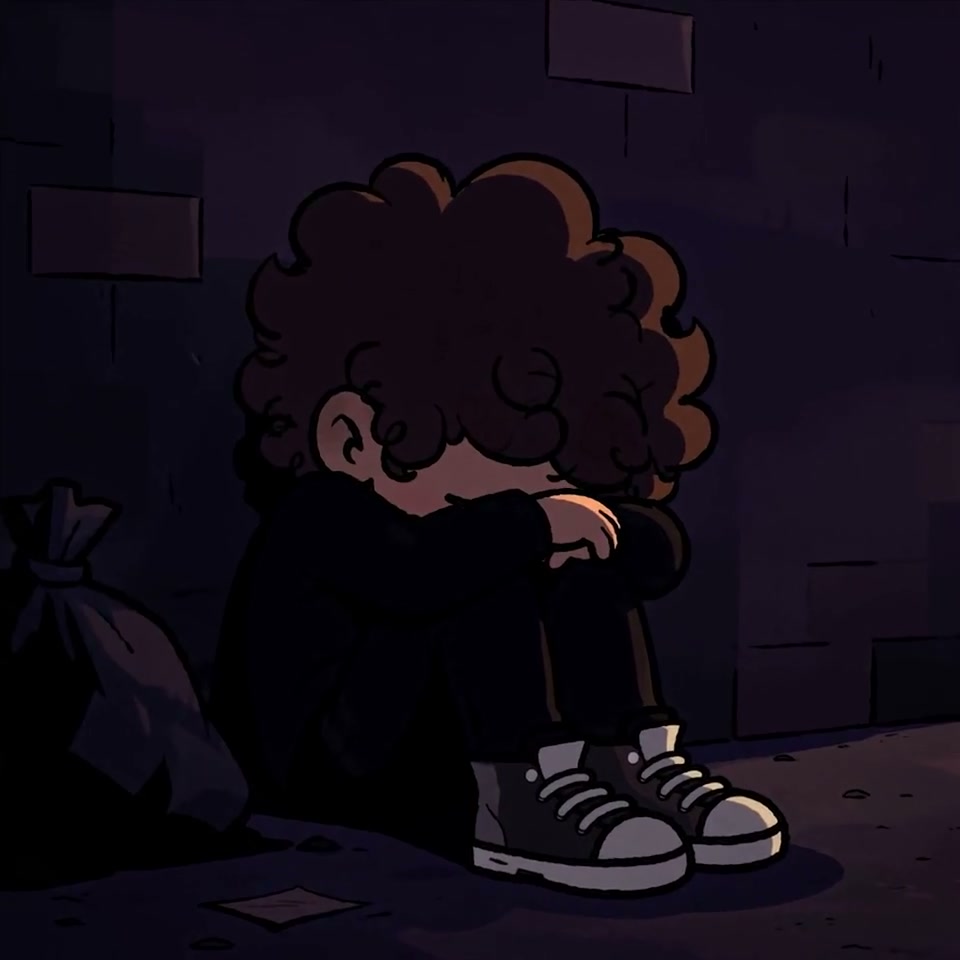
Start with the whole pose. In the pavement shot, the lowered head and folded limbs concentrate attention in a small area. The shoes extend forward, but the rest of the body closes inward. That arrangement can suggest withdrawal or distress. It gives the viewer something physical to read even where hair and clothing conceal details of the face.
For a scene of your own, pause on the pose and describe what the body actually does. “The head rests on the arms” is more useful feedback than “make it sadder.” The first points to a visible choice. The second leaves the problem open. Look at whether the head, shoulders and hands support the same reading, or whether an unrelated movement distracts from it. A restrained pose may already carry enough information.
Framing determines how clearly that pose reads. Here the character occupies much of the square image, and the pavement anchors the feet. The surrounding wall and darker street give the figure a setting without competing with the folded shape. When reviewing a shot, reduce it to the size at which people will actually watch. If the gesture disappears, a more useful framing change may be to show less of the surroundings rather than add a larger expression.

The close-up changes what the viewer can inspect. Curved eyebrows, the eyes and the hand across the lower face become prominent. The hand prevents a clear view of the mouth, so the performance is shared between the face and the covering gesture. An expression does not need every facial feature to be equally exposed.
A close-up earns its place when it adds a detail that the wider view cannot show. In a review, compare the two frames: what can you understand now that you could not see earlier? That question helps distinguish a purposeful cut from a closer version of the same information. It also keeps attention on the character instead of on the novelty of the camera move.
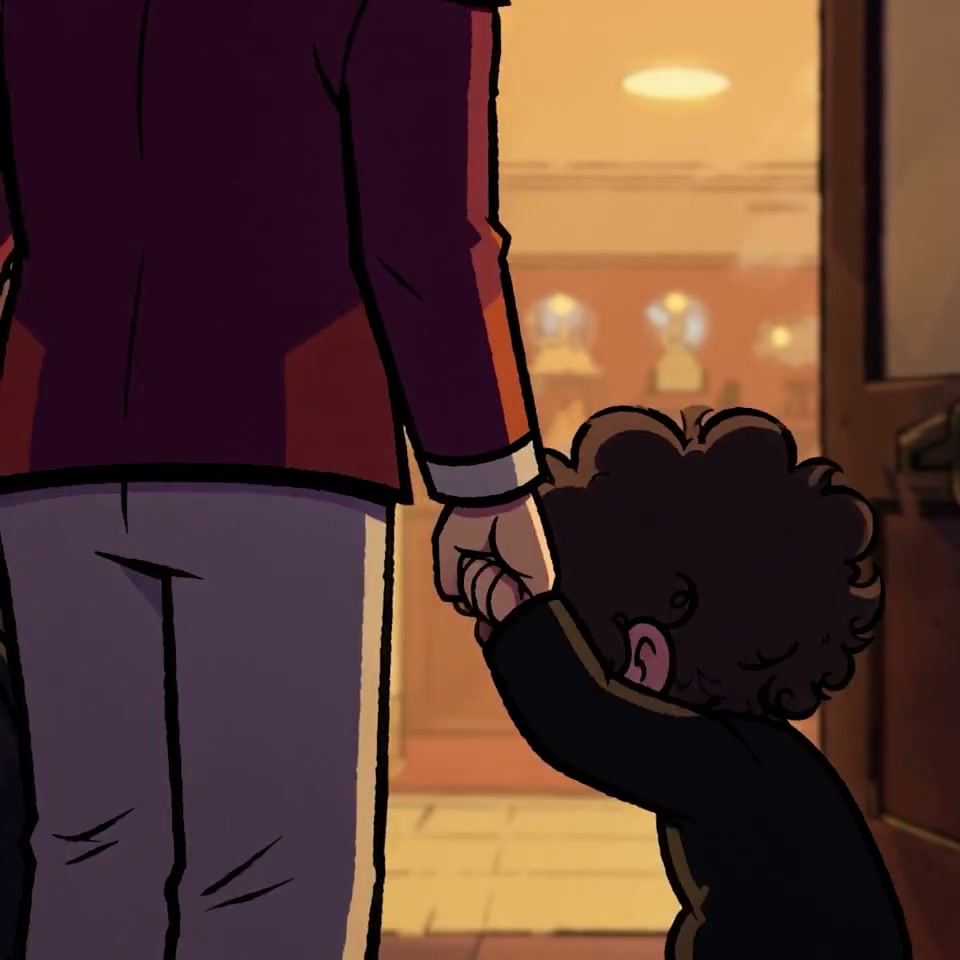
Near the doorway, the physical arrangement changes. The small character extends an arm upward and makes contact with another person. A warm, bright interior occupies the background. Compared with the earlier folded posture, the gesture now connects the character to someone outside that compact shape. The contrast can support a reading of reassurance or connection, although the frame alone does not establish who the adult is.
This is why a sequence is more informative than an isolated expression. The first pose establishes a physical state; the later gesture gives it something to change against. When selecting shots, look for that relationship. A convincing individual image can still interrupt the performance if its posture or direction of attention does not follow from the surrounding shots.
Watch the public opening film at its normal speed after looking at the stills. Check whether you have enough time to register each gesture, and whether the cut changes what you learn about the character. Stills help explain composition, but the moving sequence is where timing and performance meet. More films from the portfolio are available to watch in full.