TL;DR
- A bit was one eighth of a Spanish silver dollar, 12.5 cents. Two bits is a quarter.
- People made bits by halving the coin three times. A 27 gram dollar gives eight wedges of a little under 3.5 grams each.
- If every halving comes out 52 to 48, the biggest wedge weighs about 3.8 grams and the smallest about 3.0.
- Shopkeepers settled it with a small scale. Halfsies, my daily cutting game, does the same thing after every cut.
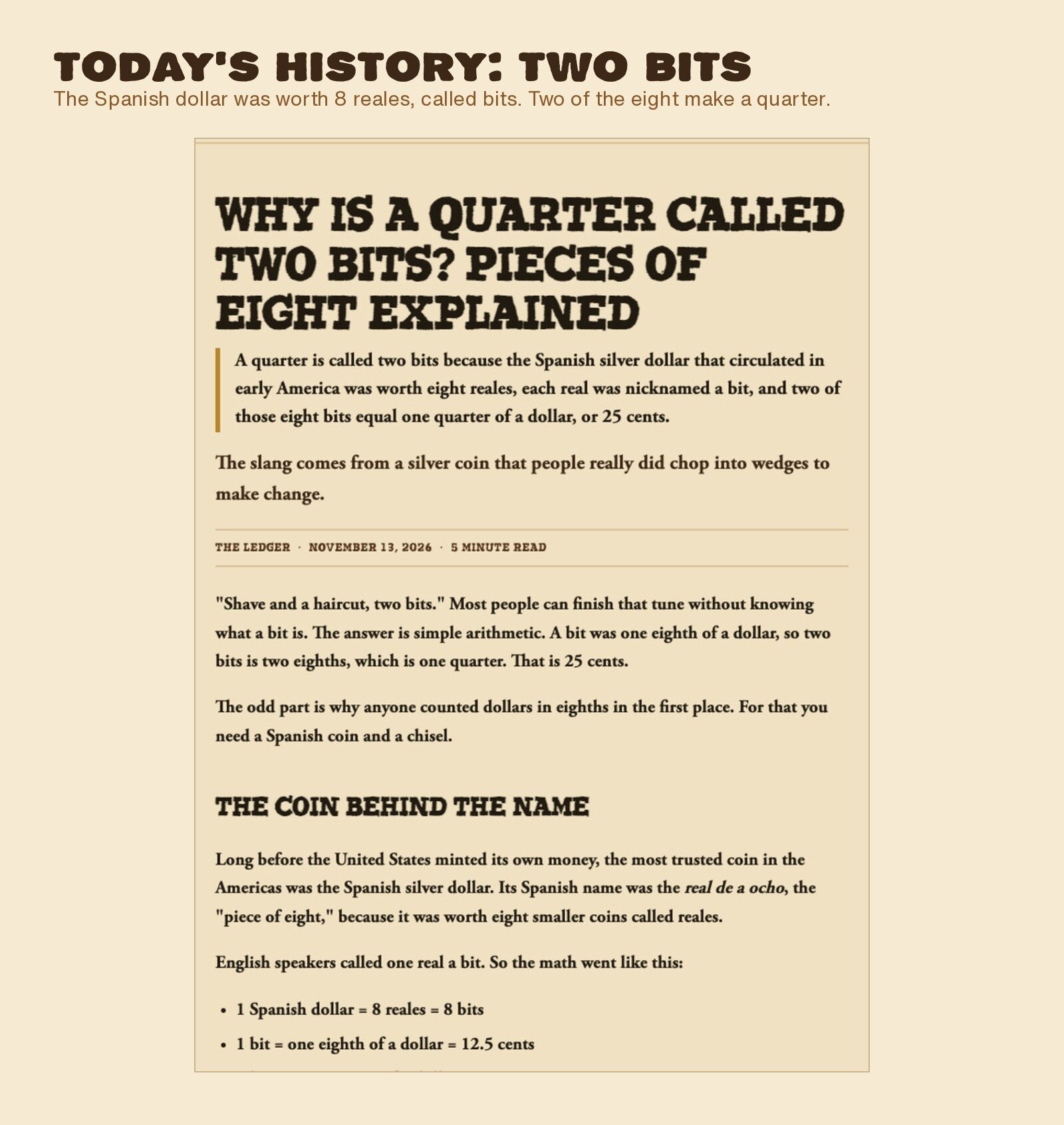
Halfsies is my daily cutting game. You get three hand-drawn objects a day and one cut each, a scale weighs the two sides, and you get a score out of 300. Today its guides page put up a history piece on why a quarter is called two bits. The answer is a coin that people cut into wedges by hand, which is the same job the game gives you.
Eight bits to the dollar
The Spanish silver dollar was the most trusted coin in the Americas before the United States minted its own. It was worth eight reales, so it was called a piece of eight, and English speakers called one real a bit. A bit was an eighth of a dollar, 12.5 cents. Two bits is 25 cents, four bits is 50 and six bits is 75.
The US dollar was modeled on that coin in 1792, and Spanish dollars stayed legal tender here until 1857. The mint never struck a 12.5 cent coin, so one bit was a price with no coin to match it. Two bits had the quarter, and the name stuck to it.
Three halvings in a row
Small change was scarce on the frontier, so people cut the dollar. You halve the coin, halve the halves and halve those again. That makes eight pie-shaped wedges, and each one is a bit. The coin weighed about 27 grams, so a fair bit weighed a little under 3.5 grams.
The guide makes a point I like: miss the first cut by a little and every piece after it is off. The arithmetic shows how fast that goes. Say every halving comes out 52 to 48, which looks close to even. The wedge that got the big side three times is 0.52 times 0.52 times 0.52 of the coin, about 14.1%. The wedge that got the small side three times is about 11.1%. A fair wedge is 12.5%.
On a 27 gram dollar that is about 3.8 grams against about 3.0. Both wedges were spent as one bit.
Nine eighths
Some of the misses were on purpose. Accounts from the period describe people slicing a dollar into nine or ten "eighths" and keeping the extra silver. Nine wedges from a 27 gram coin weigh 3 grams each. Each one is less than half a gram light, and the person with the chisel keeps a ninth wedge for nothing.
That is why a careful shopkeeper kept a small scale. A wedge of silver is hard to judge by eye, and the scale gave both sides the same number.
The same cut in the game
Halfsies ends the same way. After each cut a scale weighs both pieces, and the score is the lighter half divided by the heavier half, times 100. A 52 to 48 cut scores about 92. Weight follows the drawn area of the object, so a thin handle counts for little.
About one run in ten ends in a bonus round, and two of them are the coin problem. In Quarters you make three cuts to turn one object into four equal pieces. In Small Change you make one cut that slices off exactly 25%. That is two bits, cut by eye, with the scale as the shopkeeper.
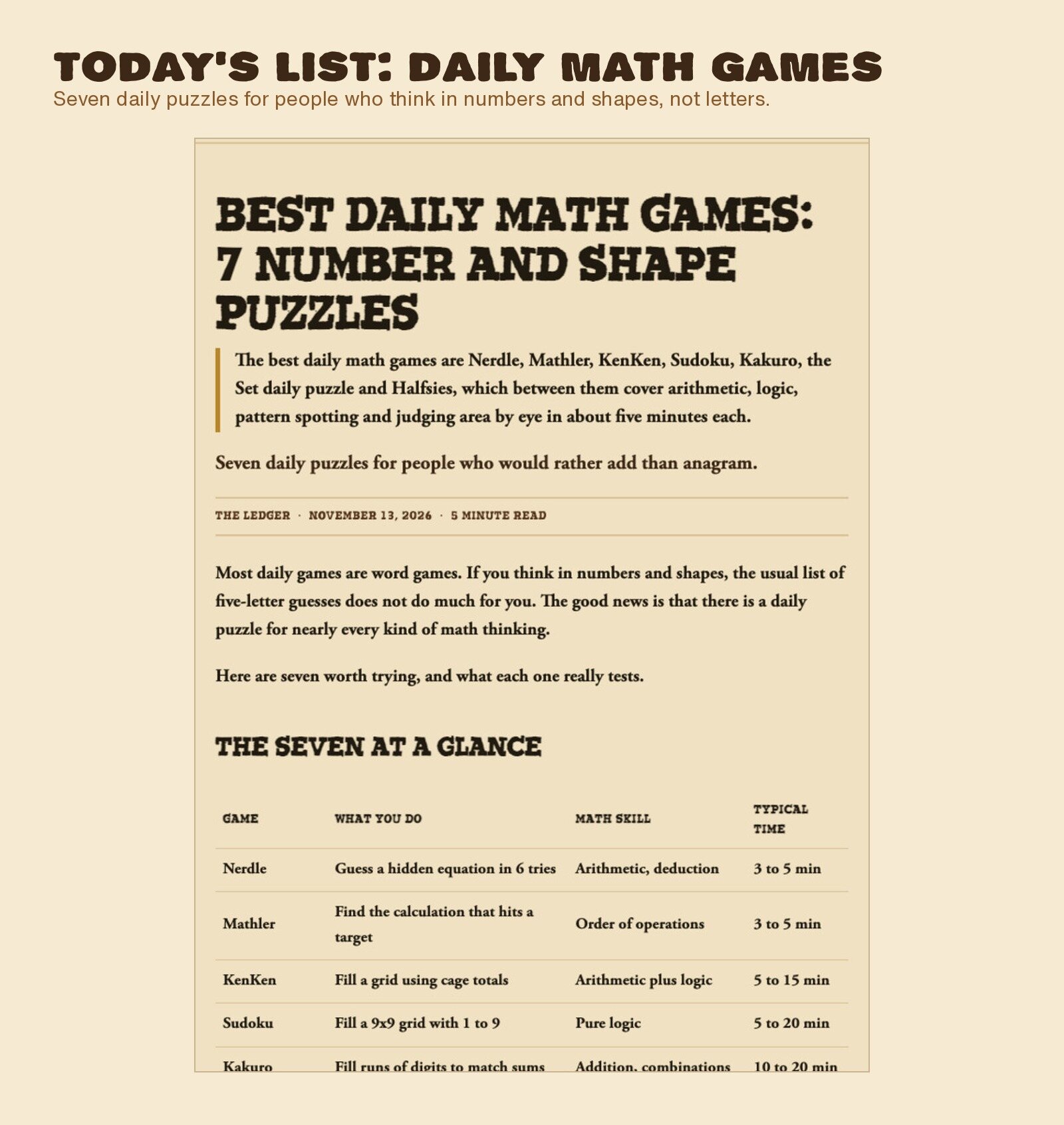
The other guide that went up today lists seven daily math games, from Nerdle and Mathler to Sudoku and Kakuro, with Halfsies as the geometry pick.
The Halfsies ad diary #15 has the rest of the day, including the ad account, which spent nothing again. Diary #11 covers the bonus rounds.
The two bits guide is on The Ledger, and the game is at halfsies.jejestudios.com.