TL;DR
- Give the boss a specific story that the viewer can recognize in the game footage.
- Show the encounter itself so the legend has something visible to connect to.
- Let the ending resolve the story as well as invite the viewer to play.
A boss can arrive as a name above a health bar. A short trailer has room to give that name a history before the fight begins. The useful question is whether the history changes how the viewer reads the encounter.
In The Canyon Was Named for Him, Old Sidewinder is introduced through a tall tale: a snake was there before the canyon, and the ground kept his shape when he moved. The film then cuts into Gunslinger’s Gold gameplay. The landscape, the snake and the bounty become parts of one short story.
Make the legend specific enough to see
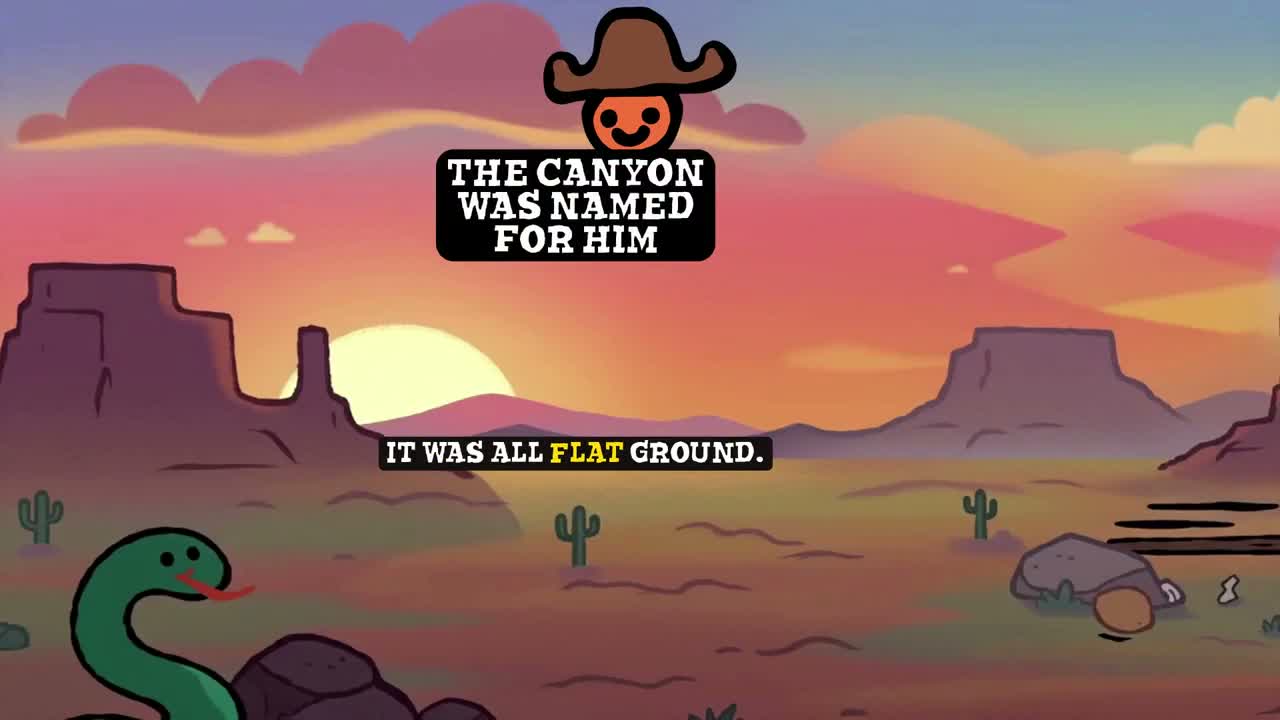
The opening puts the snake low in a wide desert landscape. The mesas and sunset are much larger than the creature in the foreground. That contrast makes the claim about forming a canyon feel extravagant. A generic warning that the boss is dangerous would supply less to picture.
The story gives the viewer two things to carry into the next scene: a long snake and a place shaped by him. When the film changes to the game, those ideas remain available even though the image changes completely. A trailer can use this kind of connection without explaining every part of its world.
For another game, start with an observable detail: a location, a silhouette, an object or a habit. Build the introduction around something that can reappear in the footage. If the trailer promises a particular encounter, give the audience a chance to recognize it when play begins.
Let the encounter carry the middle
The middle of this film shows the cowboy moving through an arena and facing Old Sidewinder. The boss has a visible name and health display. Smaller snakes and attack effects occupy the space around the player. The trailer lets the encounter take up time instead of treating gameplay as a brief end card.
The captions also change their job. Early lines tell the legend. Later lines direct attention to the fight, including the timing of a strike and the use of space. What matters for this reading is the relationship between the words and the visible action. A short caption can help the viewer notice an event that would otherwise pass quickly.
Watch a trailer once with sound off and once without reading its captions. The first pass tests whether the text and pictures connect. The second tests whether the action remains intelligible on its own. If a sentence describes something the shot never shows, choose a better shot or narrow the sentence. Avoid using the story to promise behavior that the footage cannot demonstrate.
The full film above also makes the change of medium explicit. Its illustrated opening and game footage look different. Their shared subject carries the connection. Keeping that distinction visible helps viewers understand which images establish the world and which images show the game.
Pay off the legend at the end
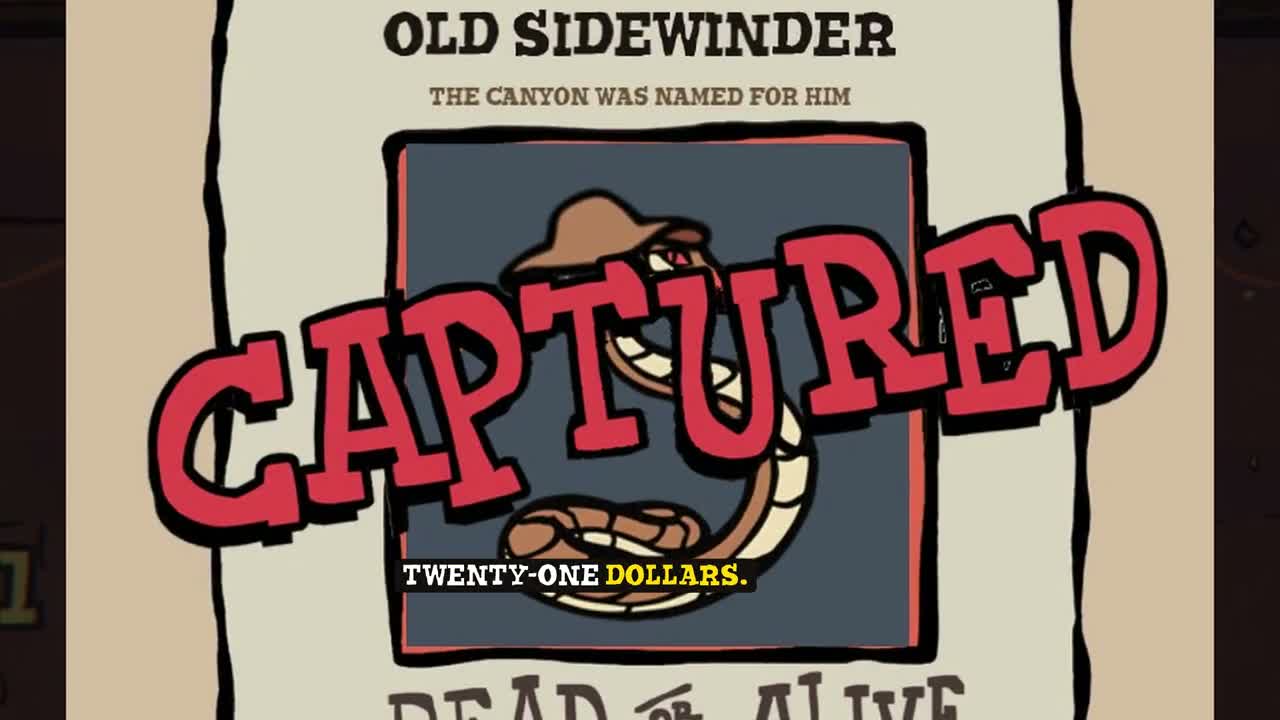
After the fight, the captured bounty card supplies a clear outcome. The film gives the reward as twenty-one dollars, then returns to the desert. The modest price becomes a joke beside the enormous claim about the canyon. The ending uses information planted at the beginning, so it belongs to this particular boss.
That is a useful editing test: remove the opening and ask whether the ending loses anything. Here, the price of a canyon depends on the earlier story. If an ending works equally well after any introduction, there may be an opportunity to connect it more closely to the subject.
Leave the invitation to play legible after the payoff. The public film ends with a browser-play message and the game’s address. The story has already resolved, so the final instruction can stay short. Viewers who want the encounter have a next step, while viewers who only watch the film still receive an ending.
For the broader game context, see Gunslinger’s Gold. The original film page preserves the trailer as its own work. The example is useful because the legend, gameplay and payoff can all be checked in the same finished sequence.