Get the band to the bus. That sentence gives Lemmys a goal a player can picture before learning the controls. A line of small musicians moves through a landscape of skulls, stone, fire and stage equipment. The player gives them new moves and guides them through the hazards. The destination belongs to the same world as the characters: a tour bus packed with the band.
Lemmys is Prince Zoho’s rock-and-roll puzzle game inspired by Lemmings. Its public gameplay film shows the marching group, the command strip, several routes and a completed rescue. Those visible details give a useful example of how game art can explain a puzzle. The group needs a way through the level, the player can change that journey, and reaching the exit produces a countable result.
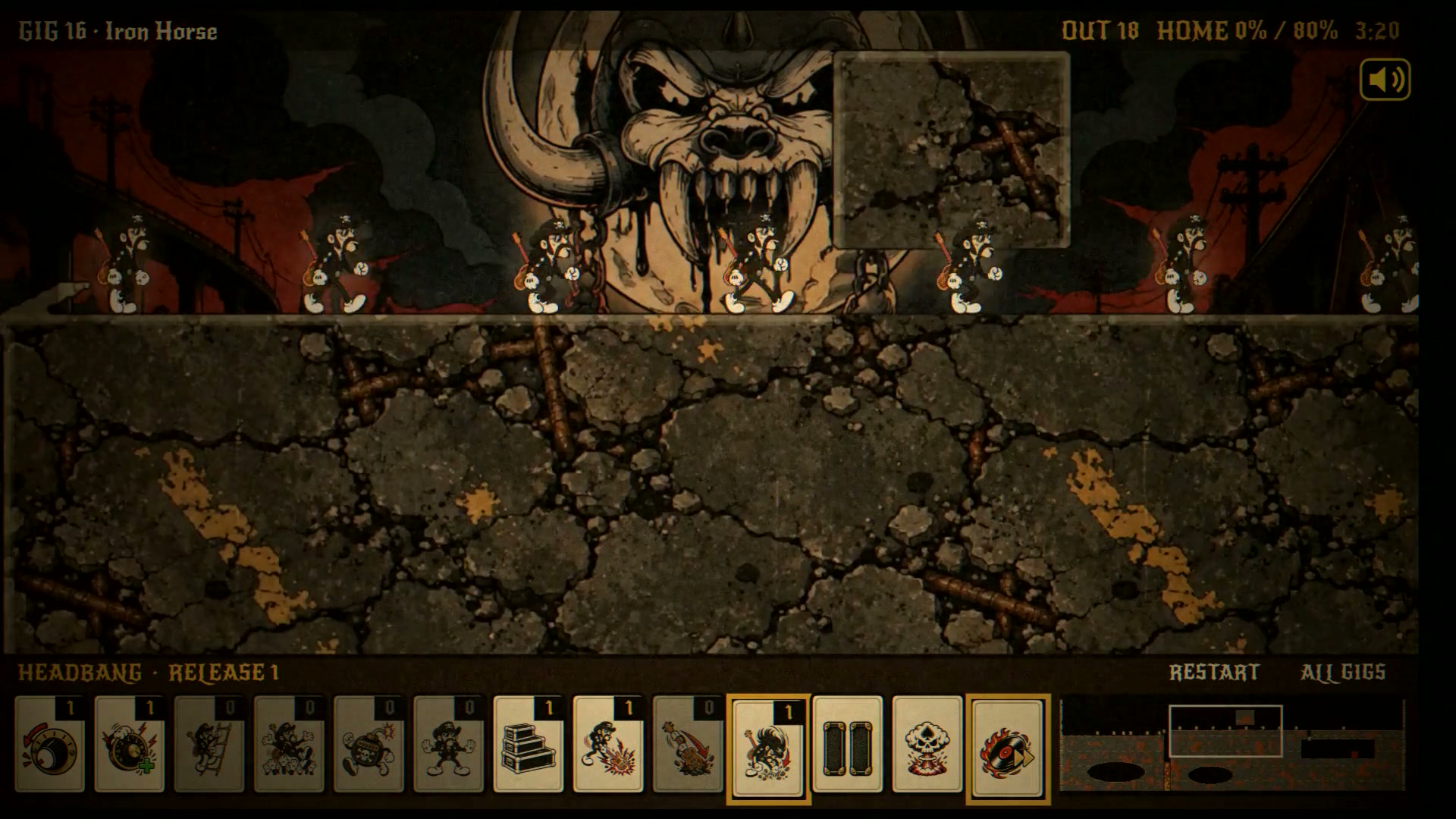
Start with who the player is trying to save. In the film, the band members repeat a small, pale character shape against much darker scenery. The group is easy to pick out even when a level contains large skulls and layered platforms. Their shared appearance lets the viewer follow them as a group. Individual figures still occupy distinct places along the route, so a line can stretch, divide across heights or gather near an exit.
That repeated figure has a job beyond establishing style. In a puzzle with many moving characters, the player has to see where the group is now and where its next members are heading. A useful art review keeps those questions close to the image. At the size people will play, can they distinguish a character from the surface beneath it? Can they follow the line when the route crosses another platform? The dramatic background should leave enough contrast around those moving figures to answer both.
The route needs the same care. Lemmys shows horizontal ledges, drops and enclosed passages in its gameplay scenes. Stone edges mark changes in height; red and orange areas carry the surrounding heat. A skull can fill much of the background while the route remains a narrower shape in front of it. Looking at the full frame, then a smaller version, helps reveal whether a decorative edge could be mistaken for somewhere a character can walk.
Color alone can only carry part of that explanation. A player also needs edges, openings and recognizable landmarks. For a new puzzle scene, review the path in a still image before relying on motion to explain it. Trace the visible journey from the arriving group toward the exit. Any point where the path becomes uncertain is a place to inspect the art, the camera view and the cue together.
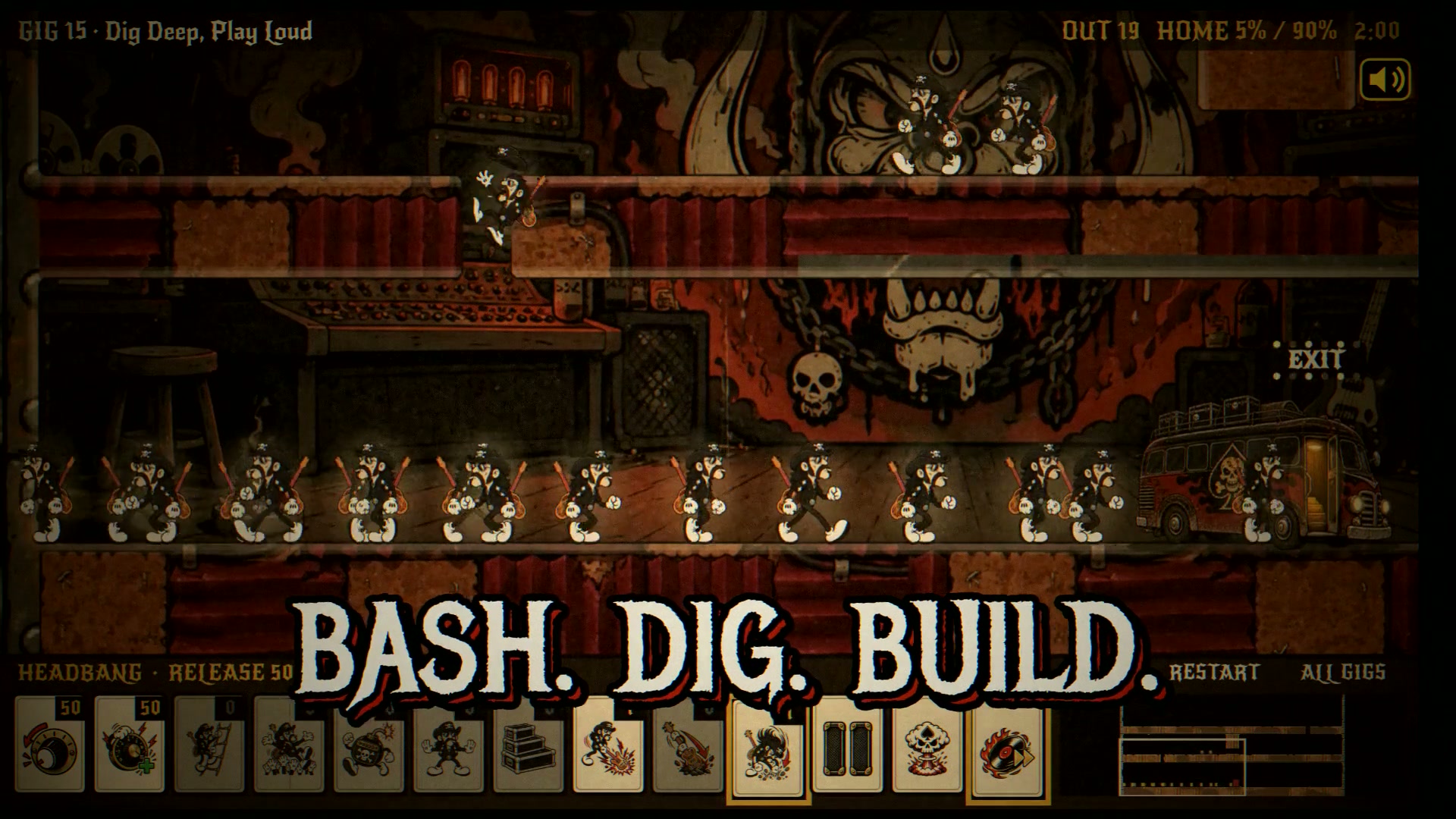
The film names three actions in plain verbs: bash, dig and build. The words sit over gameplay with illustrated command buttons along the bottom. That combination tells a new viewer the kind of intervention available. The level is visible above, and the row below identifies the choices the player can make. The art can be loud and elaborate while the verbs stay short enough to understand on first reading.
For an unfamiliar command, pair the icon with its name and a visible consequence. Give the reader or player enough of the scene to connect the selected action with a change in the route. A cropped image of an attractive button cannot make that connection on its own. In a tutorial or an illustrated explanation, keeping the character, command and relevant part of the level together makes the example more useful.
The exit gives the whole journey a direction. Lemmys uses a tour bus, and the film states the goal again as “Get the band to the bus.” The musicians, commands and destination share the touring-band idea. The bus is a large recognizable object with wheels and windows, while the characters are the small figures being gathered. That difference in scale makes the destination clear without requiring it to resemble another command button.
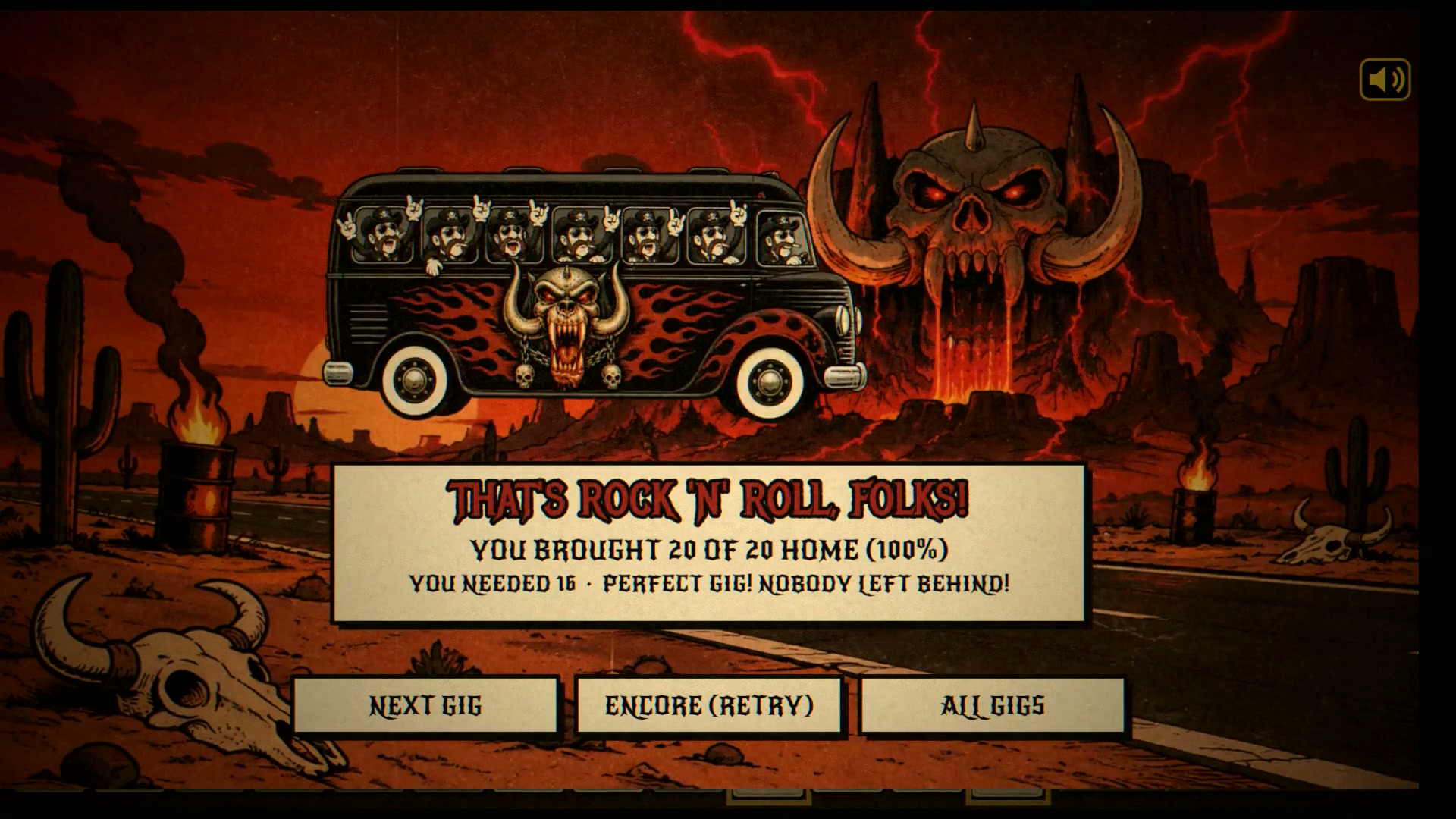
The result screen closes the journey with both an image and a number. In the shown rescue, it reports 20 of 20 home and 100 percent beside the bus full of band members. The bus carries the story; the count tells the player what happened to the group. A clear result screen keeps those two jobs visible together, especially when the objective involves several characters rather than a single arrival.
The Lemmys project page also describes a daily challenge where players can compete against others. The film supplies a short view of the game’s art and actions; playing supplies the decisions between those moments. Open Lemmys on Spawn and follow one group from its first steps to the bus. Check what the characters, route, command strip and result tell you at each stage.