TL;DR
Keep the Western setting readable, then change what the viewer expects to find inside it. Haunted Western pairs familiar hats, clothing and horses with a skull, a concealed face and a nearly featureless rider. Framing and light determine how clearly those changes register.
A hat can identify a cowboy before the face is visible. That makes the face a useful place to disturb the image. In Haunted Western, the Ghoul portrait holds onto the wide brim, neckerchief, coat and belt, while the skull occupies the place where a living face would be. The clothes establish the familiar figure; the exposed bone changes how we read it.
The public Haunted Western collection brings together short AI animations and Western imagery. The three published poster images below offer different ways to make that setting unsettling. This is a reading of what the images show, rather than an account of how they were generated.
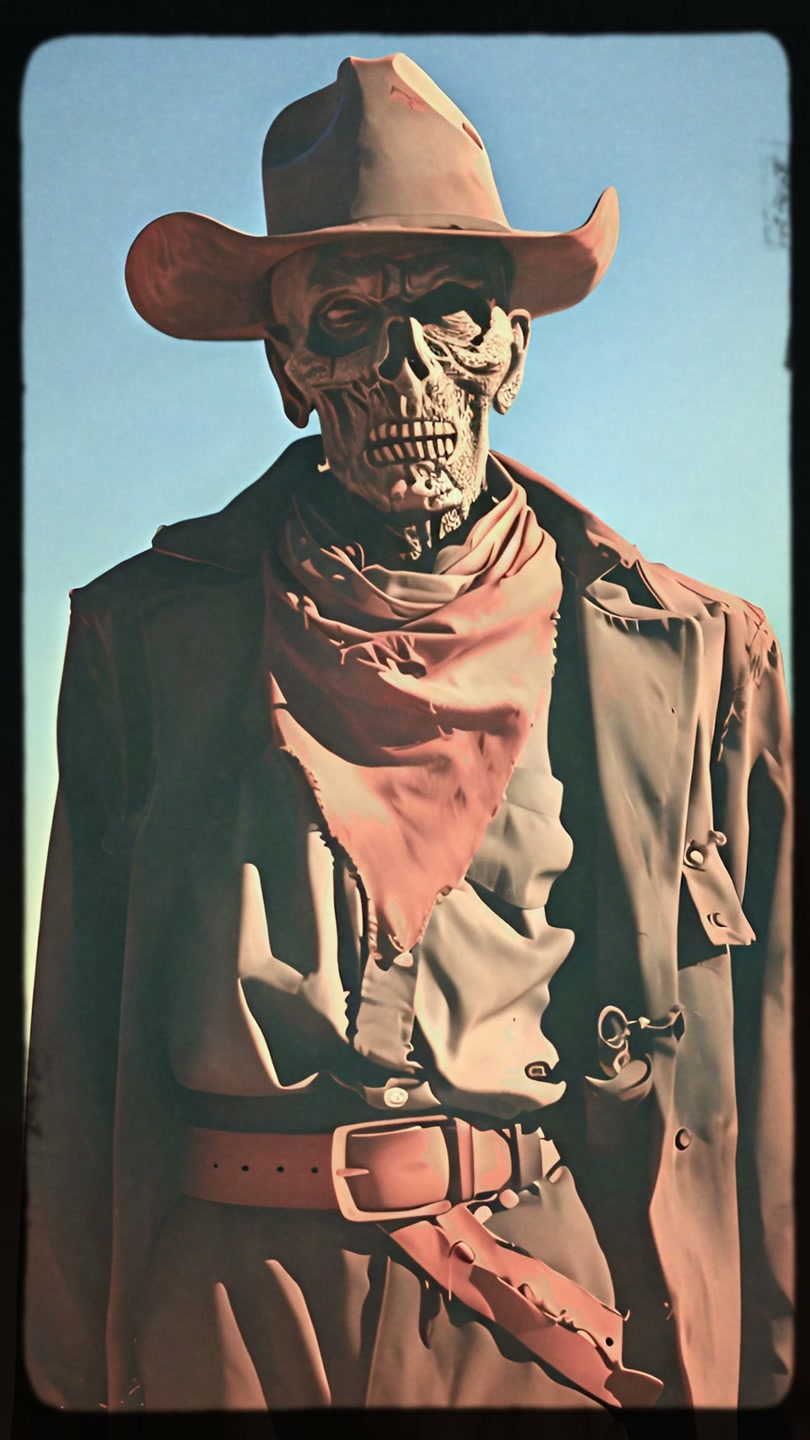
The Ghoul image makes the contradiction easy to see. Pale blue surrounds the hat, so the brim reads clearly. The warm clothing and light bone distinguish the figure from that background. The eye sockets, teeth and missing flesh remain prominent at the center. There is little scenery to compete with the portrait.
If you are reviewing a supernatural Western character, first identify which details establish the setting. Here, several agree: hat, scarf, coat and belt. Then identify the detail that changes the character. A specific answer such as “the skull sits beneath the cowboy hat” gives you something to judge. “Make it creepier” leaves the visual problem vague.
The most visible change deserves enough space in the frame. On a phone, fine surface detail may disappear while the hat and teeth remain legible. Review at that smaller size before adding more detail. If the disturbing feature is lost, a closer crop or a clearer separation from the background may help more than another prop.
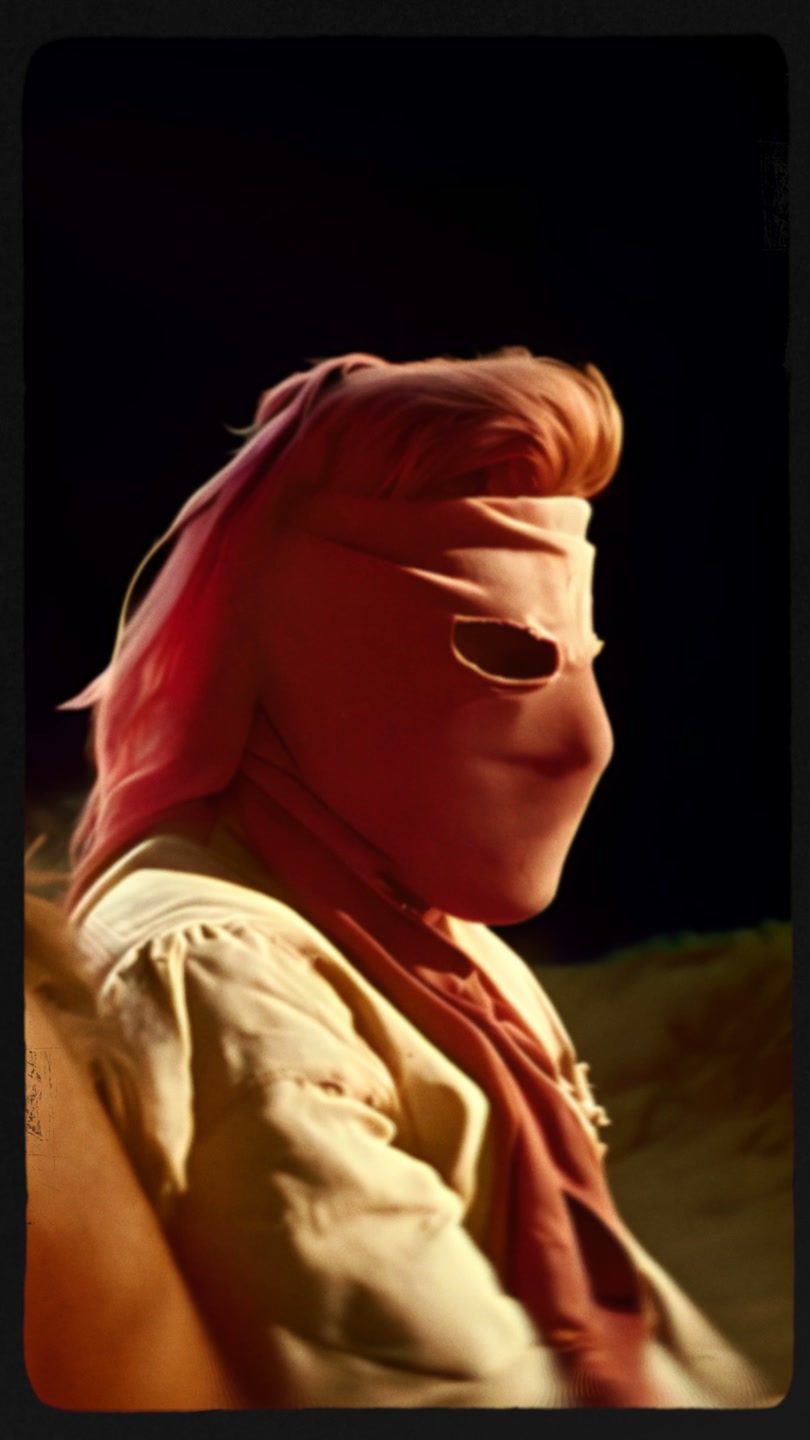
The Horseman poster withholds information in a different way. Cloth covers most of the face, with a dark opening where an eye would be. Reddish hair remains visible above and behind the covering. The pale sleeve catches the light, while the background around the head is almost black. The face is present as a shape, but its expression is difficult to read.
That concealment can feel unsettling because the viewer has fewer clues about the figure. We can inspect the cloth and the outline, yet cannot read a complete expression. This is an interpretation of the image. The poster alone does not establish the character’s motives, identity or history.
Notice how color and shape share the work. Warm hair and fabric keep the head distinct from its surroundings. The dark eye opening attracts attention within that warm area. For an image built around concealment, check whether viewers can find the covered face quickly. A completely unreadable figure may lose the specific uncertainty you wanted them to notice.
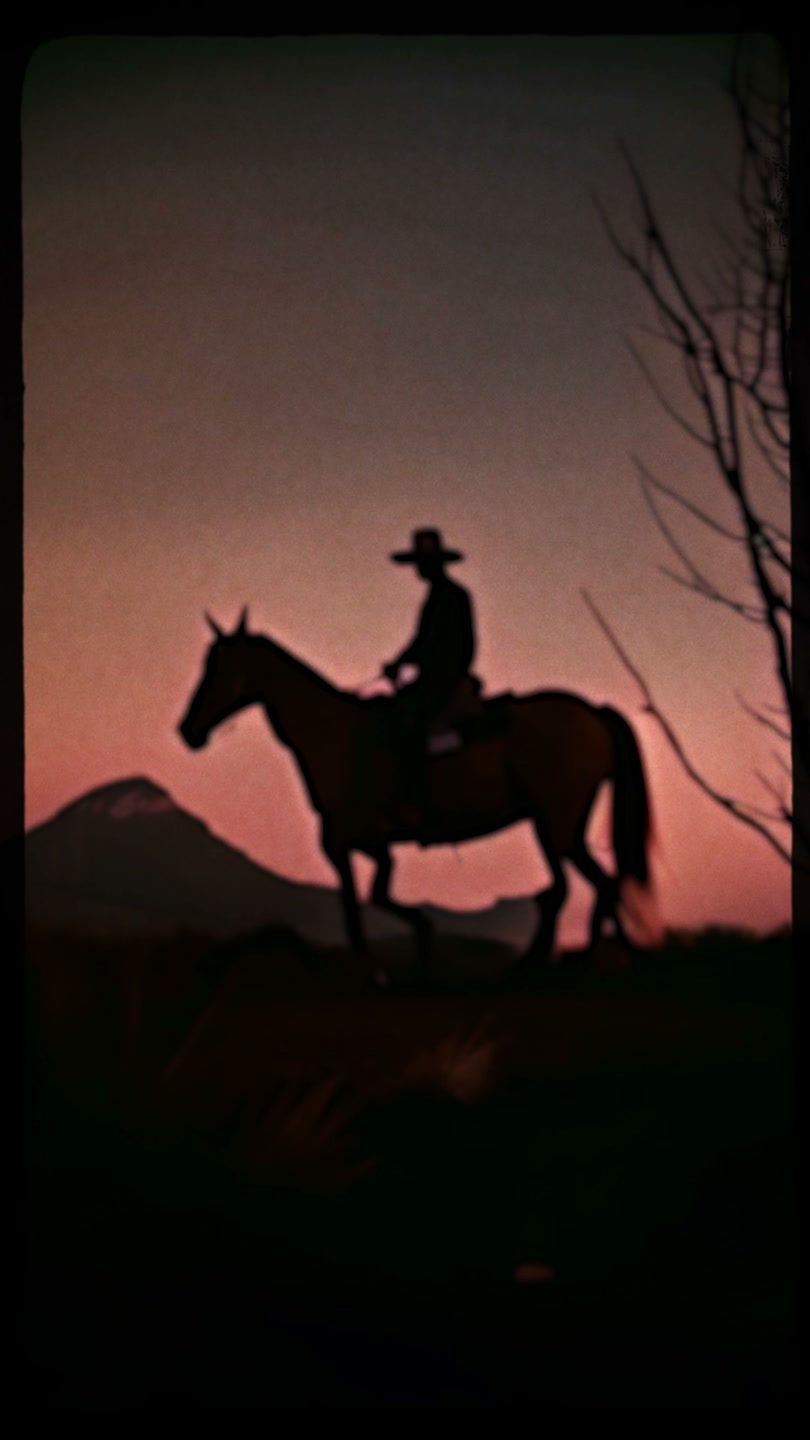
The Horse poster takes the view farther away. A rider and horse form a dark silhouette against a muted reddish sky. Bare branches enter from the right. The hat, horse’s head and legs remain recognizable, while the rider’s face and clothing details disappear. Compared with the portraits, the surrounding space now does much more of the work.
A silhouette depends on its outside edge. In this image the brim breaks away from the head, the horse’s ears rise above its neck, and the legs extend below the body. Those interruptions help a viewer recognize the subject without inspecting a face. The open sky around the upper figure gives the outline room to read.
For a sequence of images, these approaches offer useful differences in viewing distance. A portrait can expose a disturbing feature. A covered face can make expression uncertain. A distant rider can move attention to the landscape and the space around the figure. Choose the view according to what you want people to inspect, then check that the important shape survives at the intended display size.
Watch the films in Haunted Western to judge how their images change in motion. These posters are useful for discussing composition; they cannot establish the timing of a gesture or a cut. The broader Gunslingers world provides another set of Western characters and films to compare.