TL;DR
- Establish the deadline before asking viewers to follow an escape.
- Connect objects to visible actions so the route has a readable sequence.
- Let the changing day and the final obstacle show how little time remains.
A deadline gives a game trailer a question the viewer can carry from shot to shot: will the character get out in time? The audience needs to understand the destination and the cost of delay before a fast sequence of locations can feel urgent.
In Four Days to the River, a published video for Hell on the Border, the title names the journey while an on-screen clock counts through the days before a trial. The images below examine what that short video communicates on screen.
Put the deadline where viewers can find it
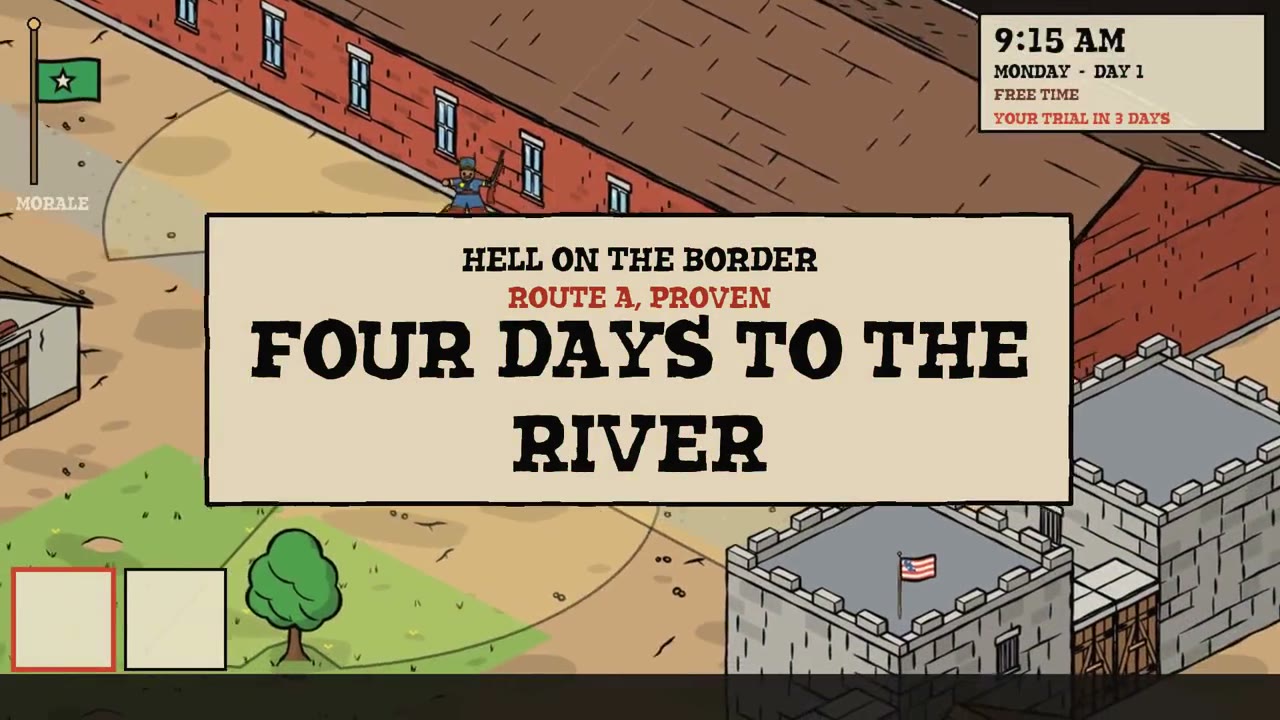
The opening has two pieces of information to read. The large title names the river. The smaller panel at the upper right says Monday, Day 1, with the trial in three days. Together they establish a destination and a reason to move. The yard, walls and watchtowers show what stands between the character and the outside.
For a trailer with a deadline, establish its visual position early. A viewer who has located the day counter once can find it again after a cut. That repeated position helps an edit move through time without needing a new explanation for every day. Keep the first view on screen long enough to read at the size people will actually watch.
Give the escape something concrete to follow
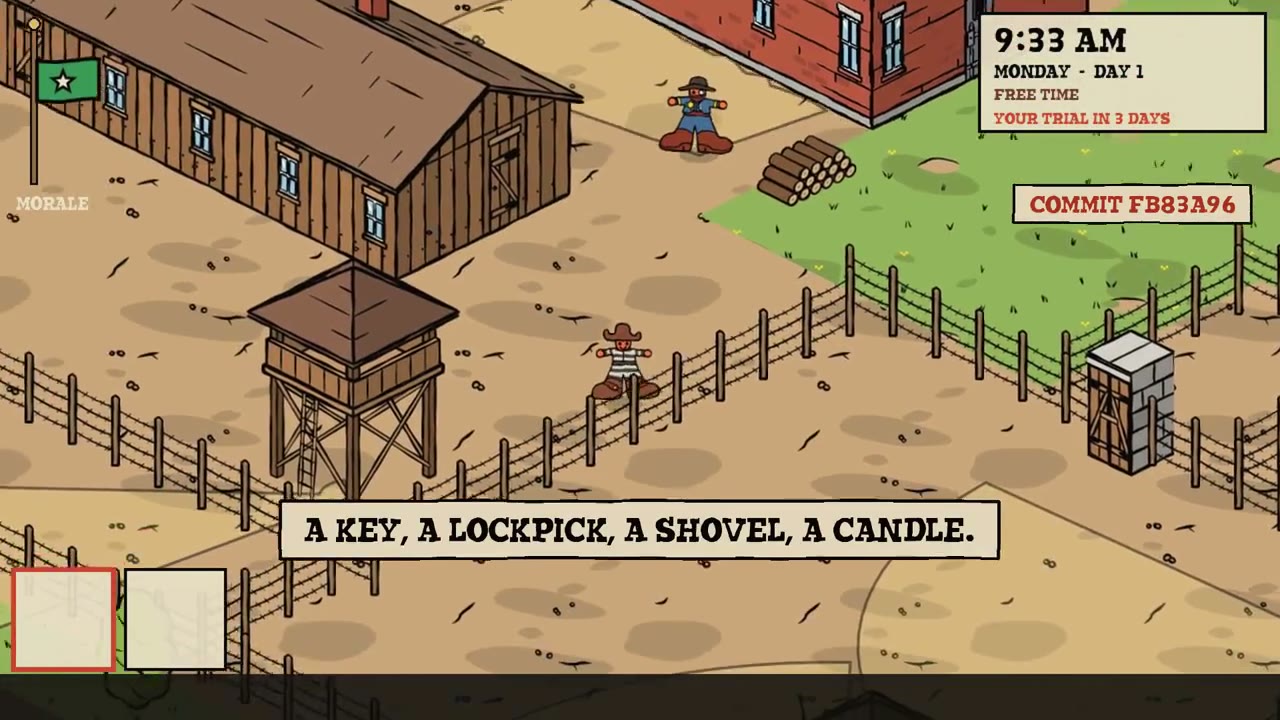
A key, a lockpick, a shovel and a candle are specific enough to suggest actions. They make the route easier to imagine than a general promise of adventure. In the published sequence, the locations move between the yard and underground passages. The objects give viewers details to connect with those changes.
When selecting footage, look for an action that answers the question raised by the previous view. A barrier can be followed by an object, then by a passage beyond it. The audience does not need every step of a puzzle, but it does need enough cause and effect to understand why the location has changed. Avoid making the viewer infer an entire route from unrelated scenery.
Make the last day visibly different
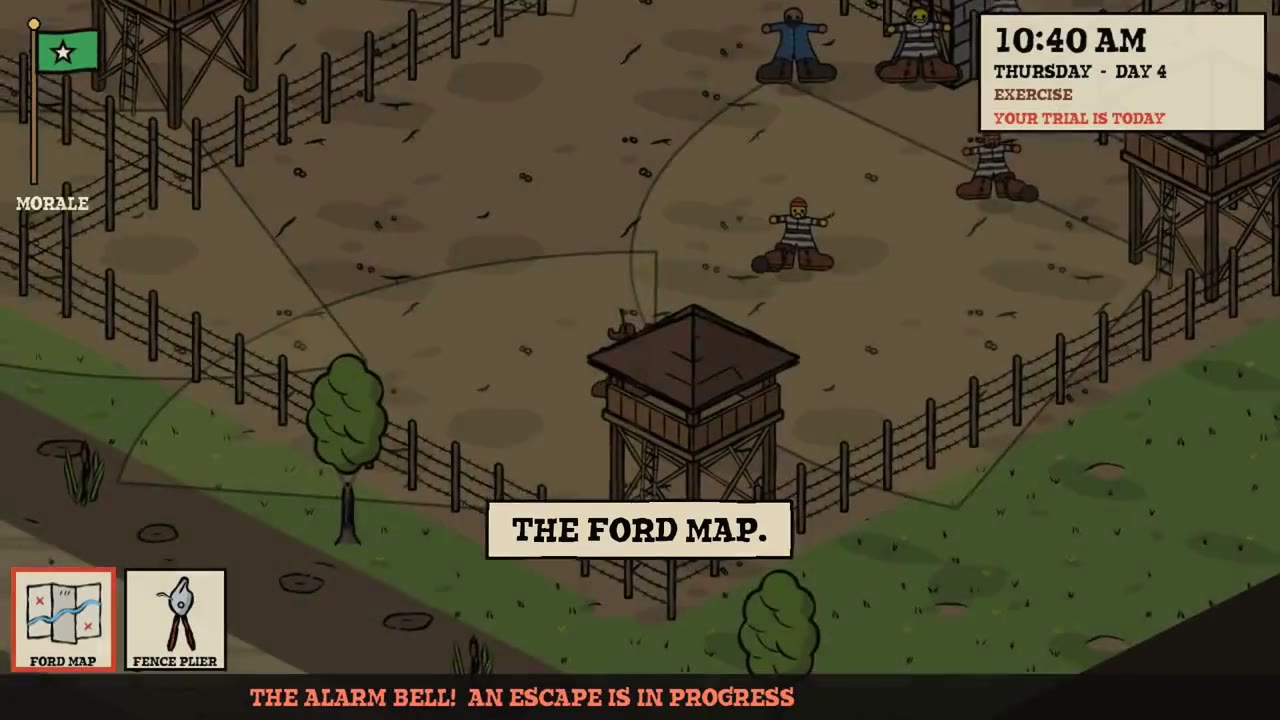
The later yard view changes the meaning of the clock. It is Thursday, Day 4, and the trial is today. A ford map and fence pliers sit in the inventory. The alarm message announces the escape. Those details put pressure on an environment the viewer has already seen.
Revisiting a place can be useful when something consequential has changed. Here, the day label and the alarm make that difference visible. A trailer can use a familiar location as a point of comparison, letting the viewer notice the new threat or dwindling time instead of learning another setting.
Check the trailer without its soundtrack
Watch the edit muted and ask someone to describe the objective. Can they identify where the character wants to go, what is in the way and why waiting matters? If the answer depends entirely on a voiceover or a caption that flashes past, give the important view more time or choose a clearer action.
Then check it on a phone. Small interface text may be readable in a full-screen game and disappear inside a social feed. The large title can establish the premise, while selected close views or a longer hold help the supporting details survive. Keep any crop wide enough to preserve the relationship between the character, the obstacle and the useful information.
Watch the complete Four Days to the River video to follow the sequence from the opening yard to the escape. The Gunslingers collection places it alongside the other films and games in the same world.