TL;DR
- Choose a recognizable shape to carry attention through a layered image.
- Leave dark space around bright details so the layers remain readable.
- Review transitions in motion and at phone size; a still only shows one moment.
A face, a glass and a cluster of colored lights can connect a music video without explaining a plot. Each gives the eye something familiar to find as the scene changes. When two views overlap, that familiar detail can hold the image together.
In Babe’s Champagne and Money, the nightclub setting supplies a vocabulary of repeated shapes: faces in close view, drinks, silhouettes and bright points of light. Music is credited to Joseph Charles Epstein and Karsten Strauss. The examples here examine the published video’s visible images, rather than the tools or process behind them.
Establish a place the eye can return to
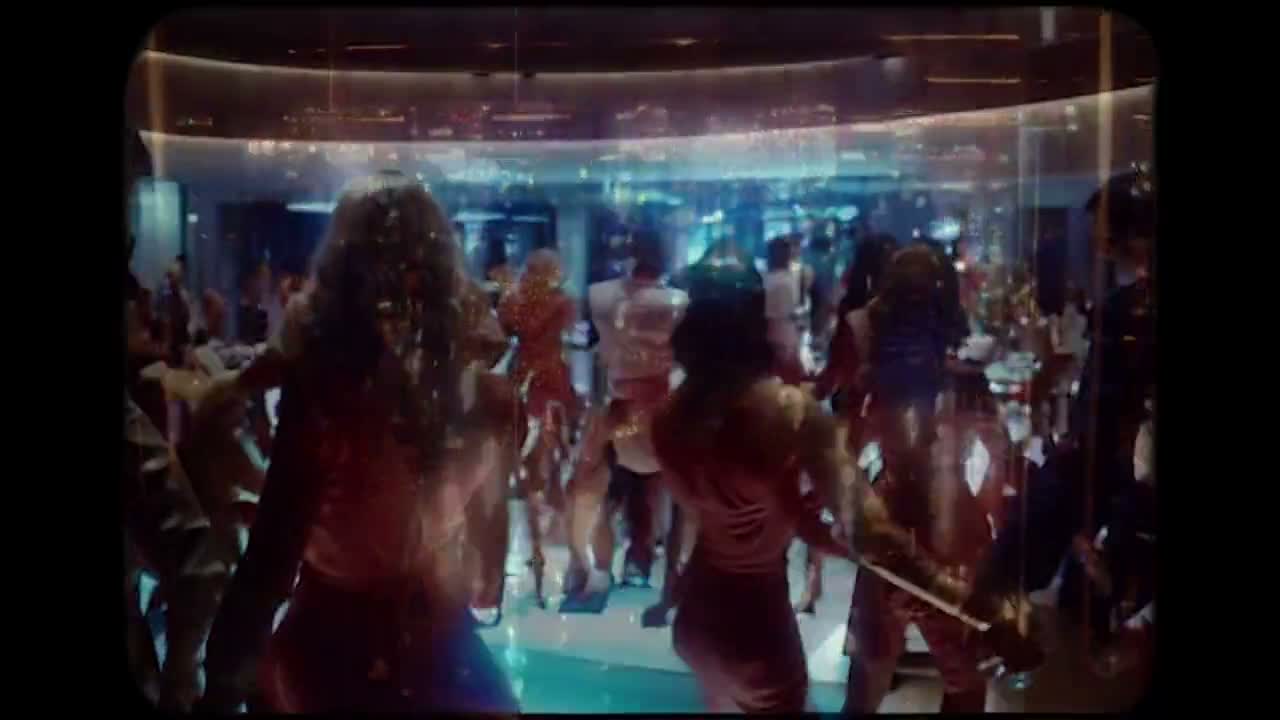
The opening view has several people in the foreground and a bright interior beyond them. The curved strip of ceiling light makes a clear upper boundary. Below it, the cooler blue area draws attention deeper into the room. Even with several figures on screen, those broad light shapes provide a readable arrangement.
A repeated setting gives a montage somewhere to return. Before layering two views, check that each has a clear subject on its own. A useful question is where your eye lands first. If every face, reflection and background light competes equally, adding another image will make that competition harder to manage.
Make a small object carry the scene
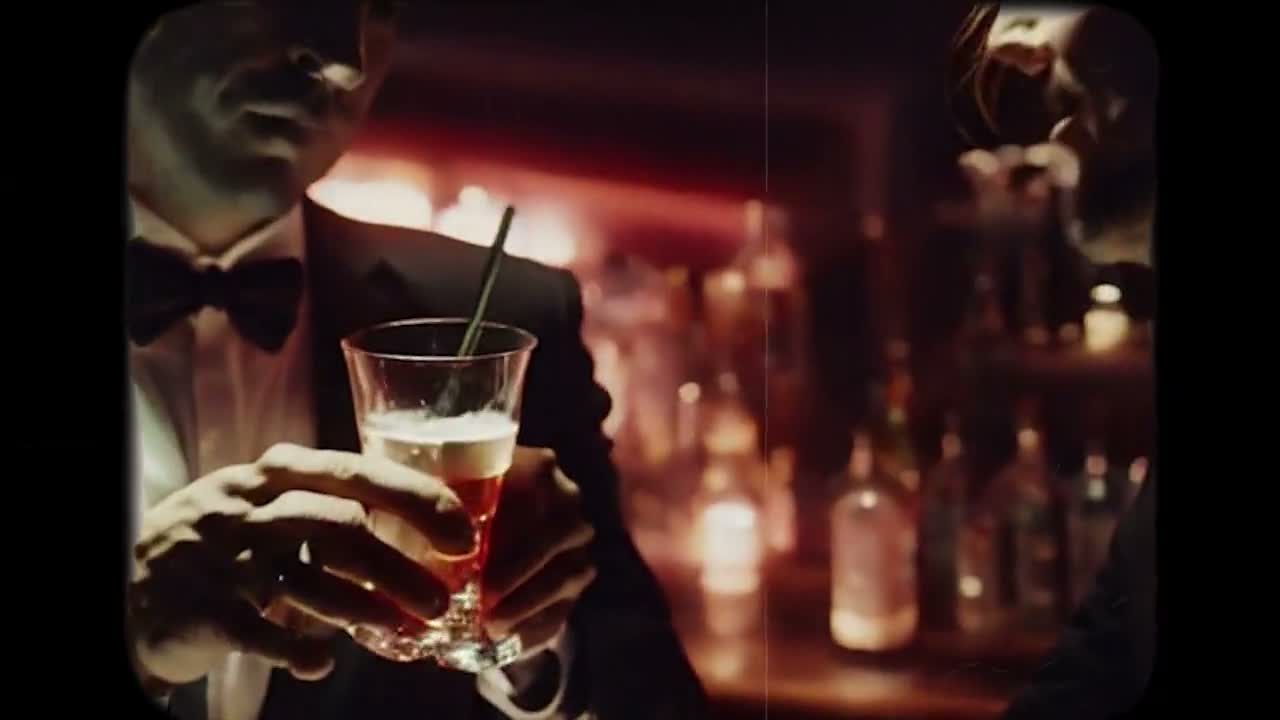
The glass gives this close view a recognizable outline. Its bright rim and the hands around it separate it from the darker room. The background still suggests the same nightlife setting, but there is less visual information to sort through than in the opening.
For a montage, a small object can provide continuity without repeating the same wide shot. Give it enough contrast to read at the final viewing size. The important detail may be the rim of a glass or the edge of a face; enlarging every background detail can weaken that hierarchy.
Let the overlap have a focal point
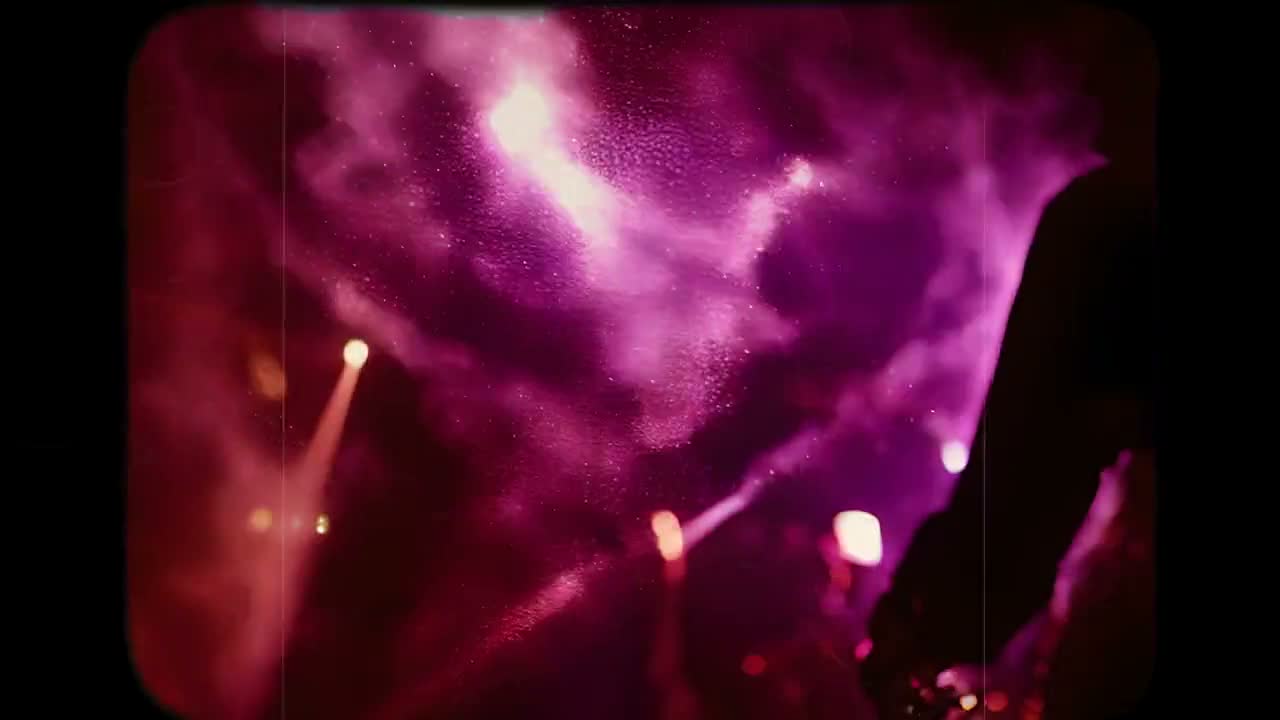
This layered view brings a pale face close to the bright pink light. Darker areas remain around the luminous shapes. The image feels crowded, but the difference in brightness gives the eye a way into it. The layers can suggest the room’s atmosphere while leaving part of the scene indistinct.
Watch the excerpt before judging the overlap as a still. The amount of time spent on the layered image, and the clarity of the next view, change how it reads. A brief ambiguous image can belong in a sequence that regularly returns to recognizable people and places. A long run of ambiguity gives the viewer fewer places to settle.
Review the passage in context
On a phone, check whether the face and the brightest light remain distinct. Then watch with the full soundtrack. The silent excerpt isolates the visual passage, but it cannot establish how a cut relates to a lyric or musical accent. Those relationships need to be judged in the complete video.
Watch Champagne and Money with sound to see the passage in context. For a different use of light in moving images, see lighting a nighttime city in an animated film.