TL;DR
- Give a wide shot something to measure: a character, a doorway or a familiar shape.
- Repeat a visual landmark across different views so a change of scale still feels connected.
- Review the cut in motion; a strong still cannot show how quickly the audience understands the next space.
A small cowboy beneath an enormous moon gives a landscape a different feeling from a cowboy filling the frame. Both can use the same palette and drawing style. The change in scale decides whether attention goes to the person or to the space around him.
The published Gunslingers film Don’t Fence Me In moves between enclosed views, broad desert scenes and close views of its cowboy. These frames provide a concrete way to study that choice. The examples below come directly from the public film; they describe what is visible on screen.
Start with a boundary
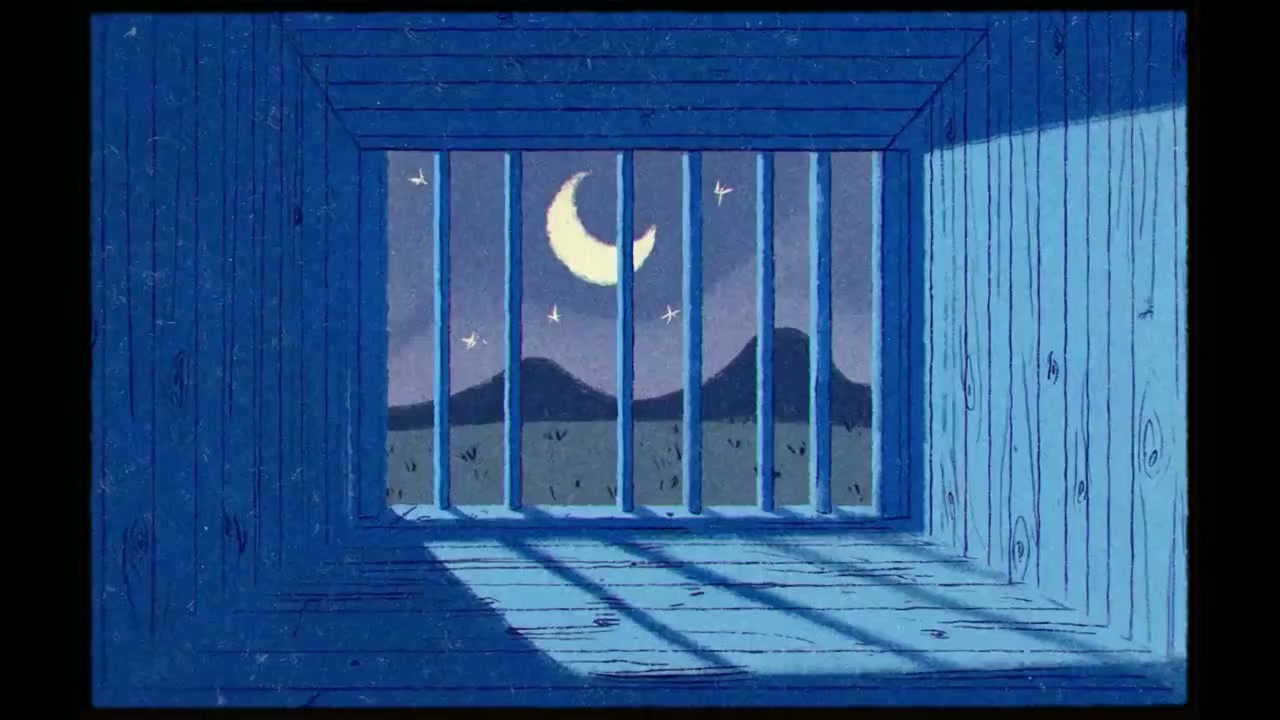
At the opening, the image looks through a barred window. The blue walls and floor occupy most of the frame. Mountains, stars and a crescent moon remain visible beyond the bars, but the viewer sees them from inside a clearly bounded space. The perspective lines lead toward the window, making the outside view the natural place to look.
For an animated scene, a foreground boundary can establish space quickly. A window edge, a doorway or an overhanging shape tells the audience where they are looking from. Check that the boundary leaves enough of the subject visible. A useful frame directs attention without requiring a caption to explain the composition.
Give the open space a measure
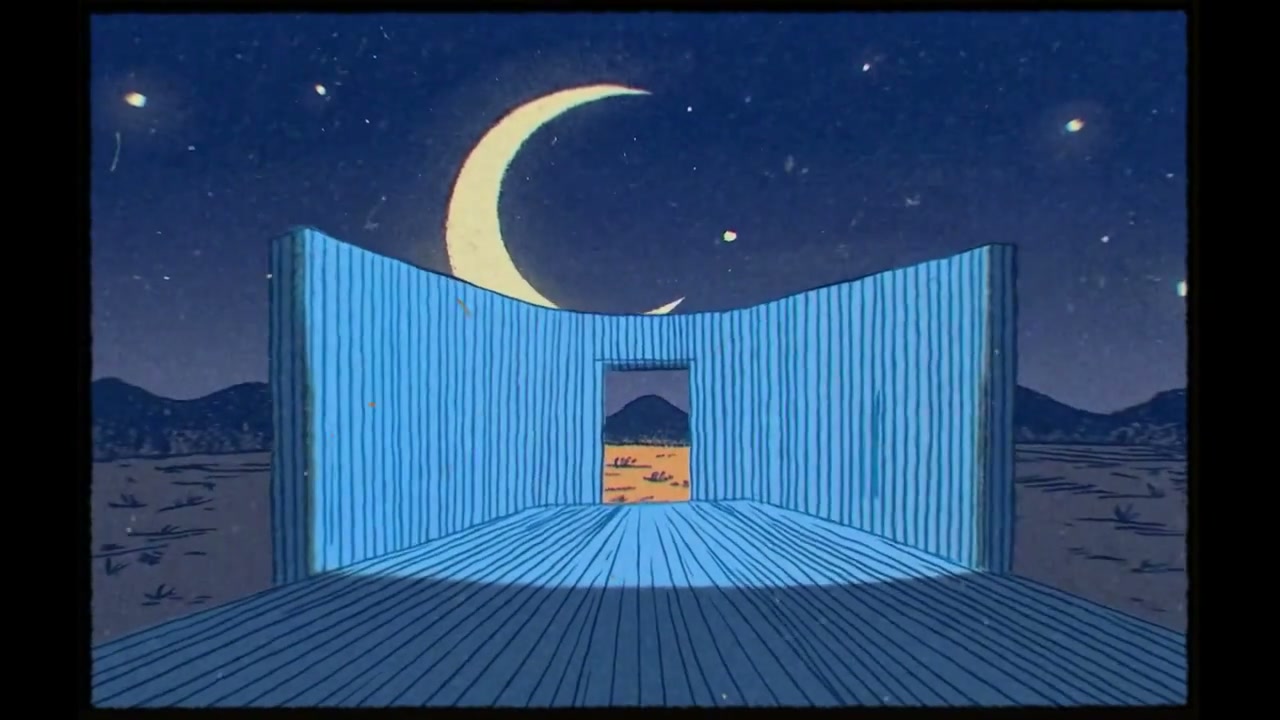
The later blue structure has a floor and side walls, with a doorway visible at the far end. Above it, the crescent moon occupies a large part of the sky. The familiar wood and blue color connect this view to the opening, while the exposed sky changes the sense of enclosure. The mountains remain a distant horizontal reference.
This relationship matters more than simply making the background larger. Without a nearby object, a wide landscape can be difficult to judge. A doorway gives the eye a familiar unit of scale. Repeating the moon gives the audience a shape to recognize as the framing changes. The scene gains room without losing every point of reference.
In the moving excerpt, the cowboy stands beneath the moon with his back toward the viewer. The composition puts a small figure below a much larger shape. Watch the space around the figure as well as the figure itself. A wide view can hold attention through that relationship even when there is little background detail.
Return to the character
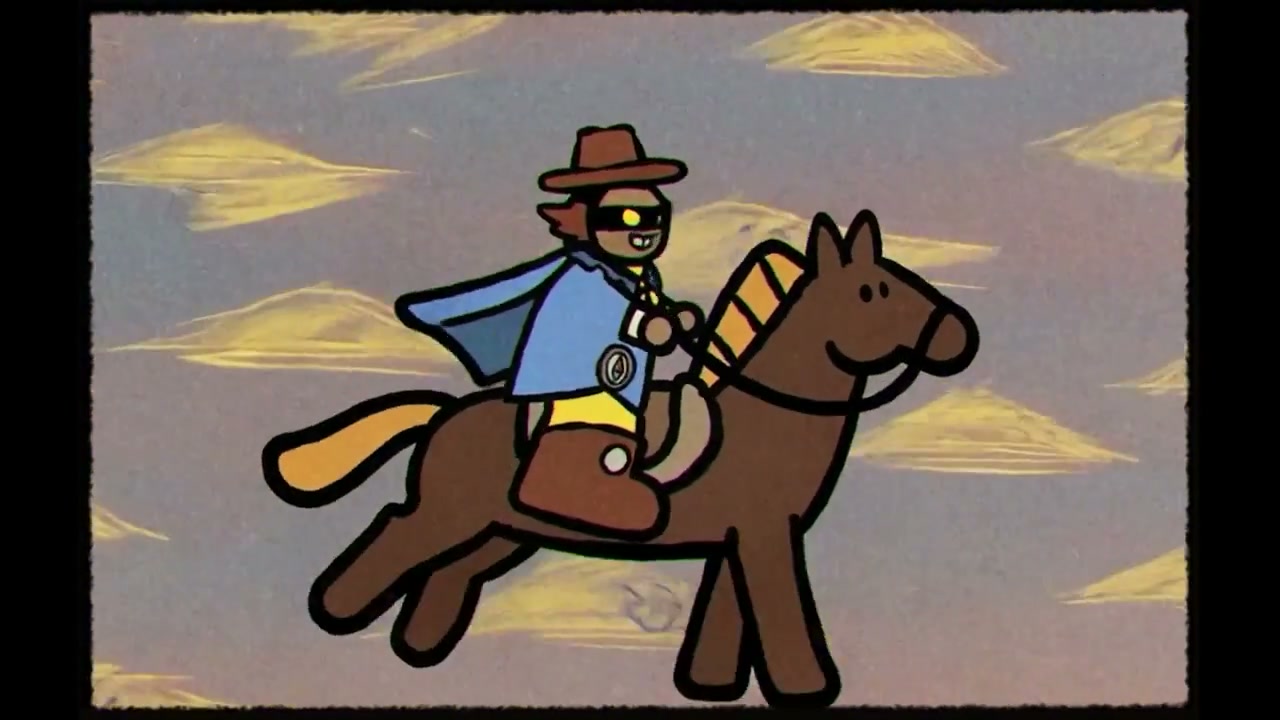
The horseback view makes another change. The horse and rider fill the image; the background becomes broad patches of yellow and muted mauve. The hat, mask, blue shirt and yellow neckerchief remain easy to recognize. There is less space to explore, but more room to read the rider’s expression and the horse’s silhouette.
A close view has a different job from the establishing view. If every shot stays wide, a distinctive character may become a small mark in the scenery. If every shot stays close, the landscape has little chance to matter. Choose the distance according to what the audience needs to notice at that moment, then check whether the next shot makes that change legible.
Judge the sequence at viewing size
Review these changes as a sequence, including on a phone. Ask where your eye lands after each cut, whether the character is still recognizable, and whether a repeated landmark helps you understand the new view. A crop that works as an isolated thumbnail may lose the doorway or moon that gave the wider frame its meaning.
Watch the full Don’t Fence Me In film to see the views in context. For a separate study of lighting and depth, see the Nightbeat article.