TL;DR
- $200 over 11 days bought 17,319 ad views, 364 link clicks at 55 cents and a 2.10% click rate.
- Meta overspent the $20 daily budget on good days, so the cap ran out on 19 October.
- A thousand views cost the same for both audiences. Gamers tapped a third as often, so their clicks cost $1.04 against $0.35.
- Meta moved 62% of the last $90.68 to the Sheriff ad, which drew 60 of the last 86 clicks.
- Clicks are not players. The next test has to show whether the pricier gamer clicks are worth it.
Halfsies is my daily cutting game for iPhone. You slice an object and the scale says how close you got to half. From 11 to 21 October I ran a $200 Meta ads test for it, and the money is now gone. The fifth Jeje Studios ad diary has every number. This is my read of what the $200 actually bought.
The receipt
| Measure | Total |
|---|---|
| Spent | $200.00 |
| Ad views | 17,319 |
| People reached | 11,161 |
| Link clicks | 364 |
| Cost per click | $0.55 |
| Click rate | 2.10% |
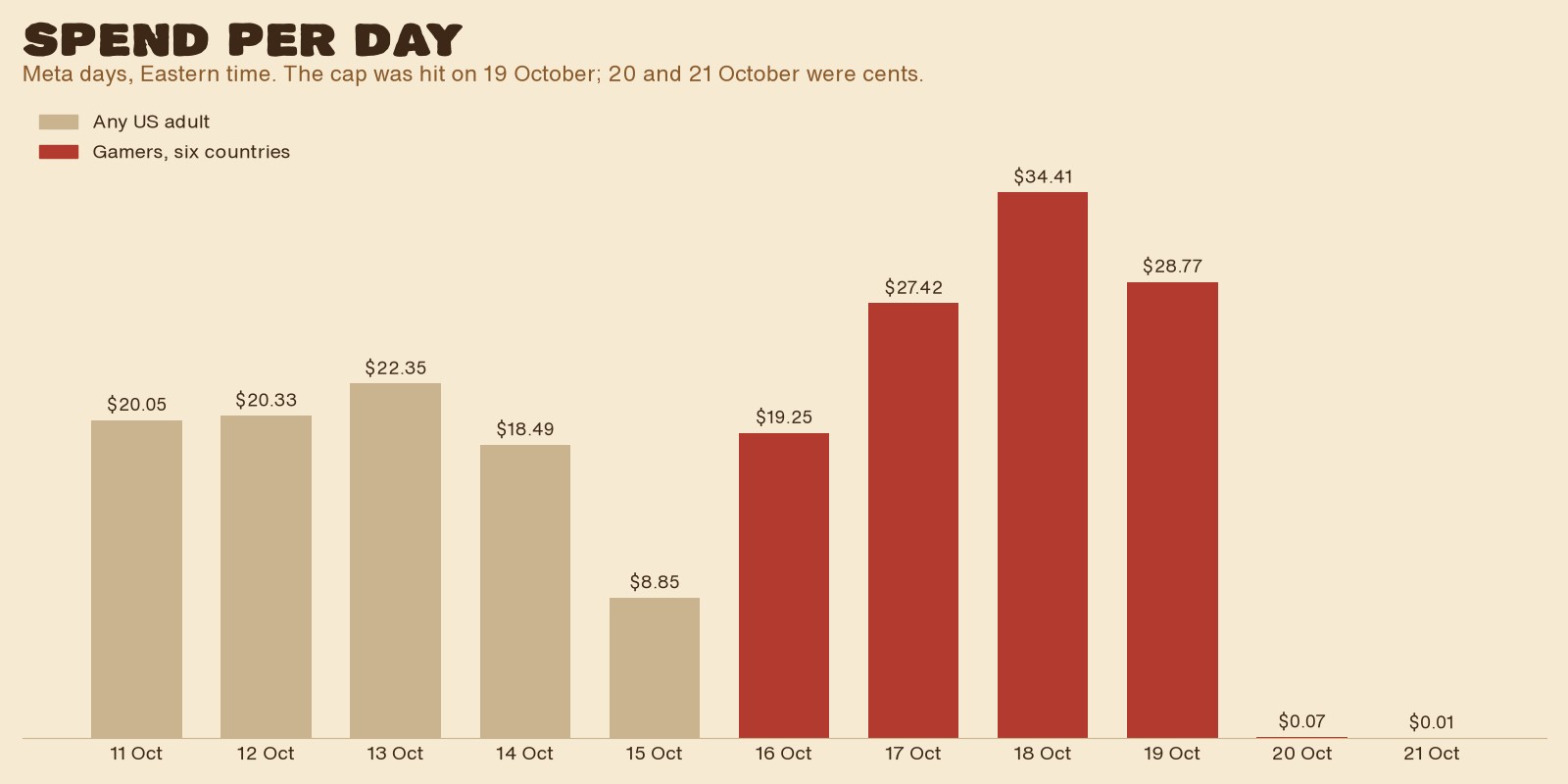
The campaign had a $20 daily budget and a $200 cap. Meta may spend more than the daily budget on a day it likes, and in the last three days it did: $27.42, $34.41 and $28.77. That is why a test I expected to run about ten days at a steady pace finished on the ninth day of real spending.
Two audiences, one price per view
For the first five days the ads went to any adult in the United States. Then I switched them to gamers aged 18 to 50 in six English-speaking countries, which the third diary covers. The final split:
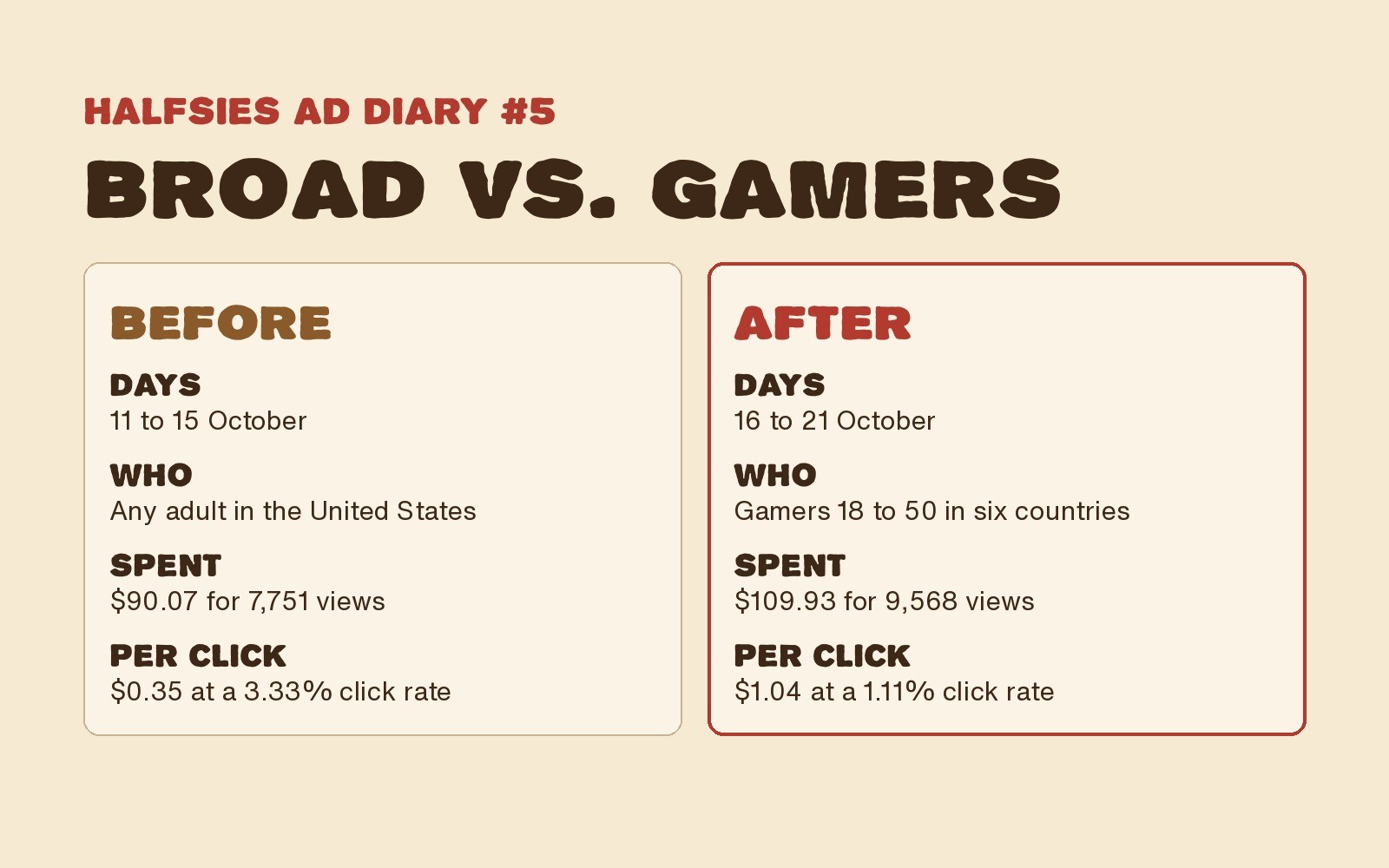
A thousand views cost $11.62 for the broad audience and $11.49 for gamers. Meta charged the same to put the ad in front of either group. What changed was the tapping: about one broad viewer in 30 tapped, against one gamer in 90. Some of the broad taps were junk from Audience Network on day one, which I wrote about when I switched it off. Even with that removed, gamers stayed the pricier click. I went through the first gamer day in why gamer clicks cost more.
The Sheriff won the money
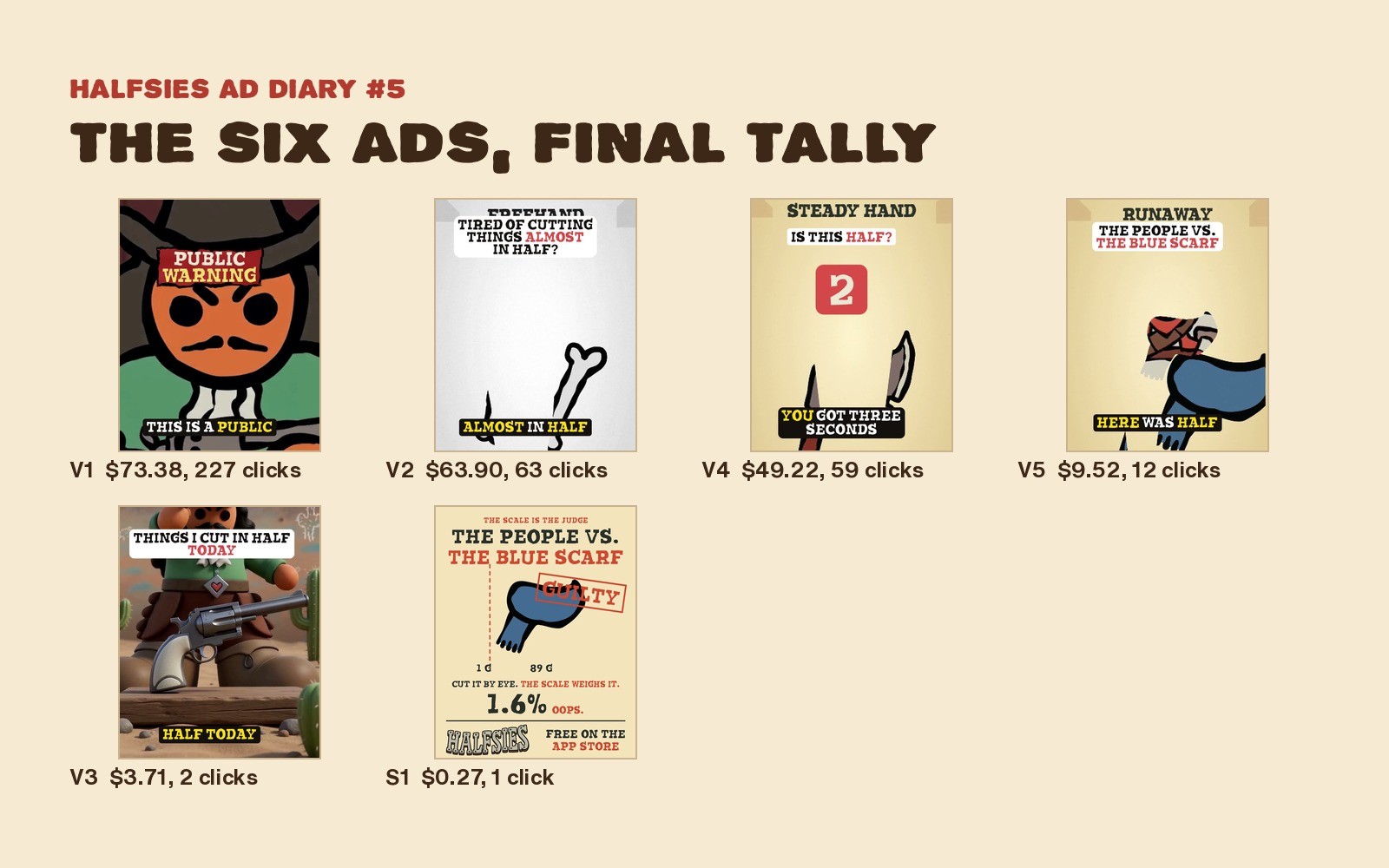
Six ads went in. Over the whole test the Sheriff warning took $73.38 and 227 of the 364 clicks, but its day-one numbers are inflated by those junk taps, so I trust the last three days more. From 17 October Meta spent $56.50 of the last $90.68 on it, 62%, and it drew 60 of the last 86 clicks. The static image got 27 cents and one click before Meta stopped showing it. When the algorithm is allowed to choose, it chooses fast.
What the ad numbers cannot tell me
A click is somebody arriving at the App Store page. It is not somebody playing. On the game side I can say this much in public: new players went up on the busiest ad days and fell to almost nothing once the money stopped. That tells me the ads were doing the work. It does not tell me whether the gamer clicks, at three times the price, turned into better players than the cheap broad clicks did. That is the question the next test has to answer.
While the ads ran I also shipped two updates, with seven trick shots now in the daily puzzles. You can see the game at halfsies.jejestudios.com. The first ad diary has how the test started.