TL;DR
- Paid ads for Halfsies bought 364 link clicks at 55 cents each, and the clicks stopped the day the $200 ran out.
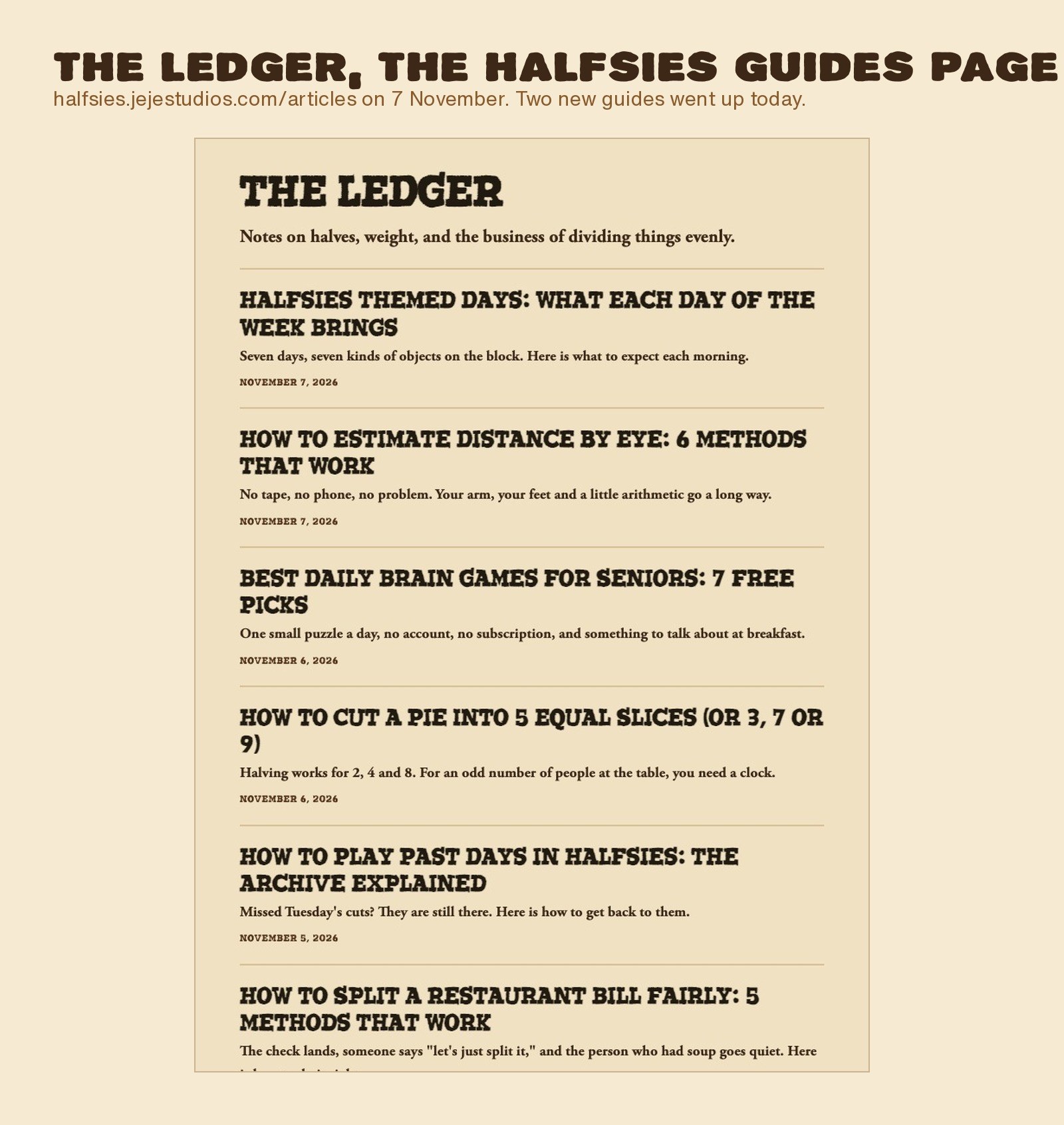
- Since 29 October the Halfsies site publishes two guides a day on The Ledger, 22 so far.
- Topics mix everyday how-to searches, gathering lists and guides to the game itself.
- Every guide opens with a one-line answer, has a table and a short FAQ, and its Halfsies facts are checked against the game's code.
Halfsies is my daily cutting game: three hand-drawn objects a day, you cut each one by eye, and a scale tells you how close you got to half by weight. In October I ran a $200 Meta test for it. Since the money ran out, the game's own website has been doing the finding instead, with two new guides a day.
What the ads bought
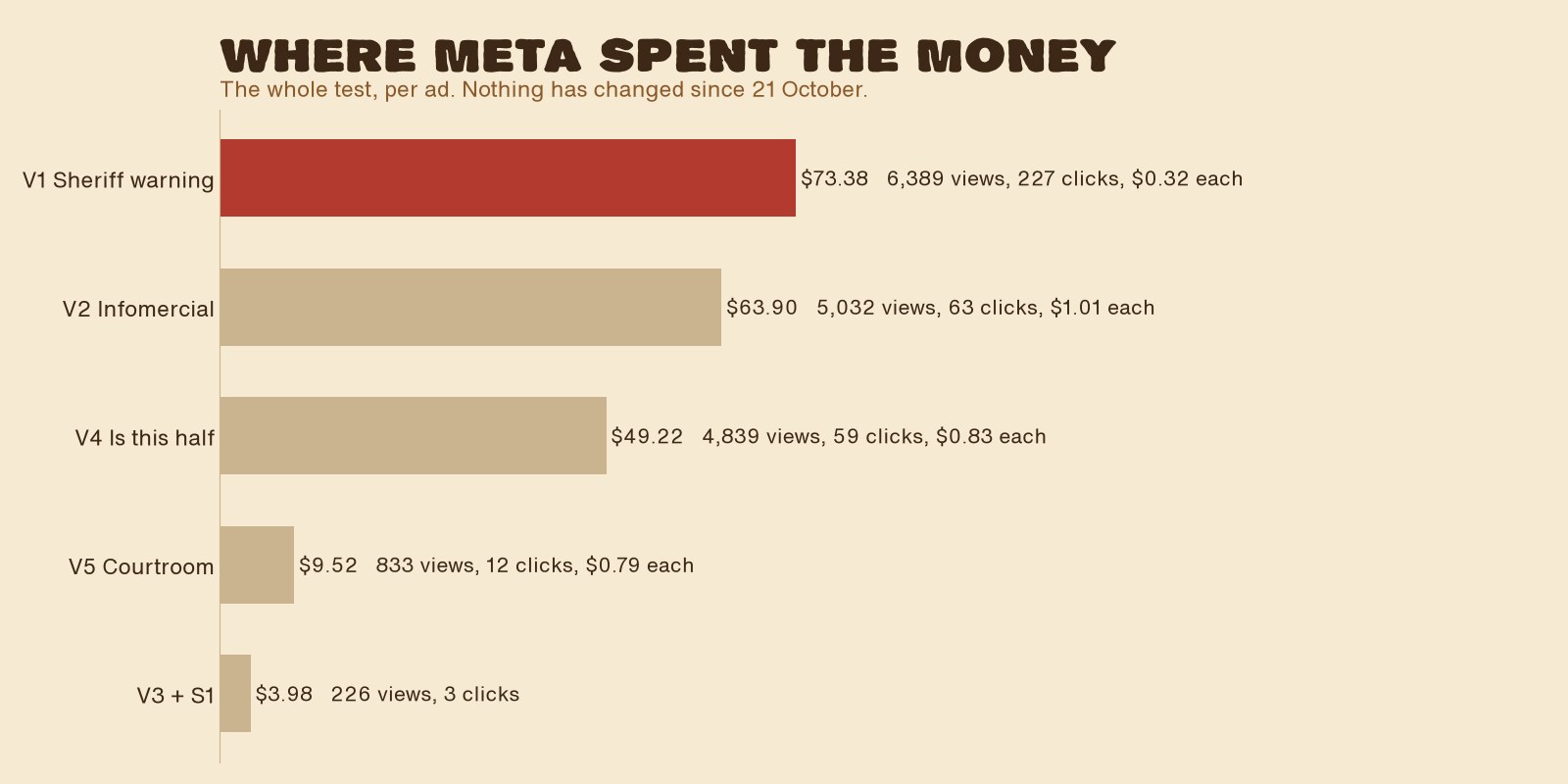
The test ran from 11 to 21 October. Meta showed six ads 17,319 times and they drew 364 link clicks, 55 cents each on average. The best one, the Sheriff warning ad, got clicks for 32 cents. I wrote that test up day by day in the Halfsies ad diary.
Then the cap hit and the clicks stopped the same day. That is how paid ads work, and it is fine when you have money to keep feeding them. A small game usually doesn't.
A guide is the opposite trade
A guide costs nothing to keep online. If it answers a question people really type into Google, it can keep bringing readers long after the day it went up. The catch is time: a new page can take weeks before it shows up in search results at all. So guides are a slow bet that pays later, and ads are a fast one that stops when you stop paying.
The Ledger already existed. It got 14 articles in August and then nobody touched it. On 29 October, the day version 1.3.5 shipped, I set it to grow by two guides every day, written by Claude on a schedule.
How the topics get picked
Halfsies is about cutting things exactly in half, so the guides stay close to that. They rotate between three kinds of search:
- Everyday questions about splitting and judging size: how to cut a pie into 5 equal slices, how to split a restaurant bill fairly, how to estimate distance by eye.
- Lists people look up before a gathering, like 10 easy games to play at Thanksgiving dinner or the best daily brain games for seniors.
- Guides to the game itself: all 16 game modes, how streaks and shields work, every hat and badge, how to play past days.
The first kind brings in people who have never heard of the game. The last kind helps the people who already play it, and it is what an AI assistant needs if someone asks it how Halfsies streaks work.
What every guide has to contain
- A one-line answer at the very top, so a reader or a search engine gets the point in one sentence.
- At least one table and one list.
- A short FAQ at the end.
- A link to play the game.
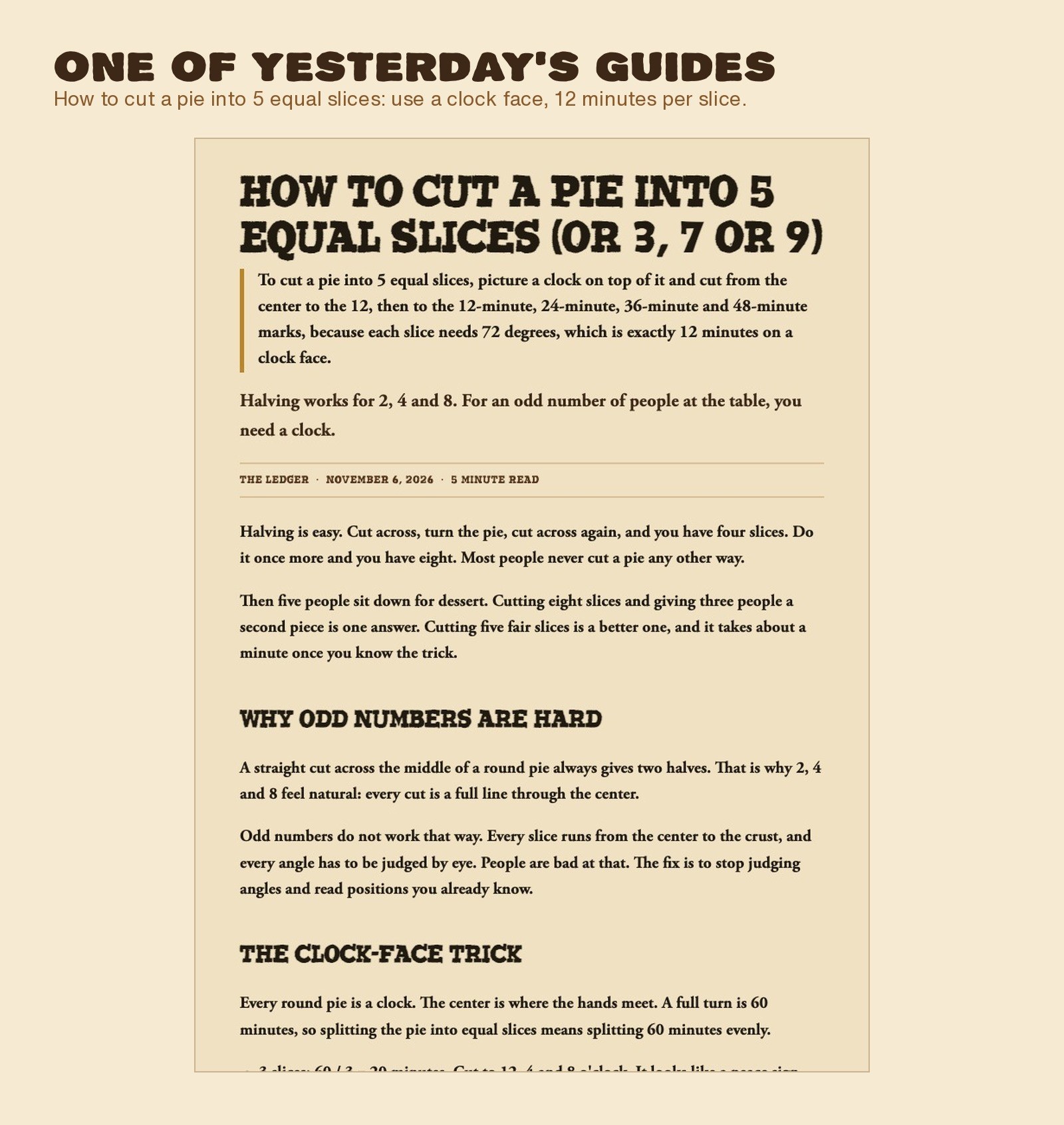
The pie guide is a good example. The answer comes first: picture a clock on the pie and cut every 12 minutes, because each of five slices needs 72 degrees, which is 12 minutes on a clock face. Everything after that is for people who want the detail.
Checking the game facts
The guides about Halfsies itself carry a risk. A writer, human or not, can describe a badge that doesn't exist or get the scoring wrong. So anything a guide says about the game gets checked against the game's code before it goes up. A guide that promises a reward the game doesn't give would cost more trust than it earns in traffic.
What I'll watch
It is too early to say whether this works. The site has 36 guides now, 22 of them from the last ten days, and search takes weeks to notice new pages. I'll report what changes in the daily diary. If you want to try the game the guides point to, it is at halfsies.jejestudios.com.