TL;DR
- Any straight cut through the center of a circle splits it into two equal halves, whichever way it points.
- You can find that center with a sheet of printer paper. Its corner on the rim gives you a diameter, and two diameters cross at the center.
- The same holds for shapes that look identical turned upside down, like a rectangle or an oval.
- Most Halfsies objects are lopsided, so the half line is rarely where the eye puts the middle. That is where scores drop.
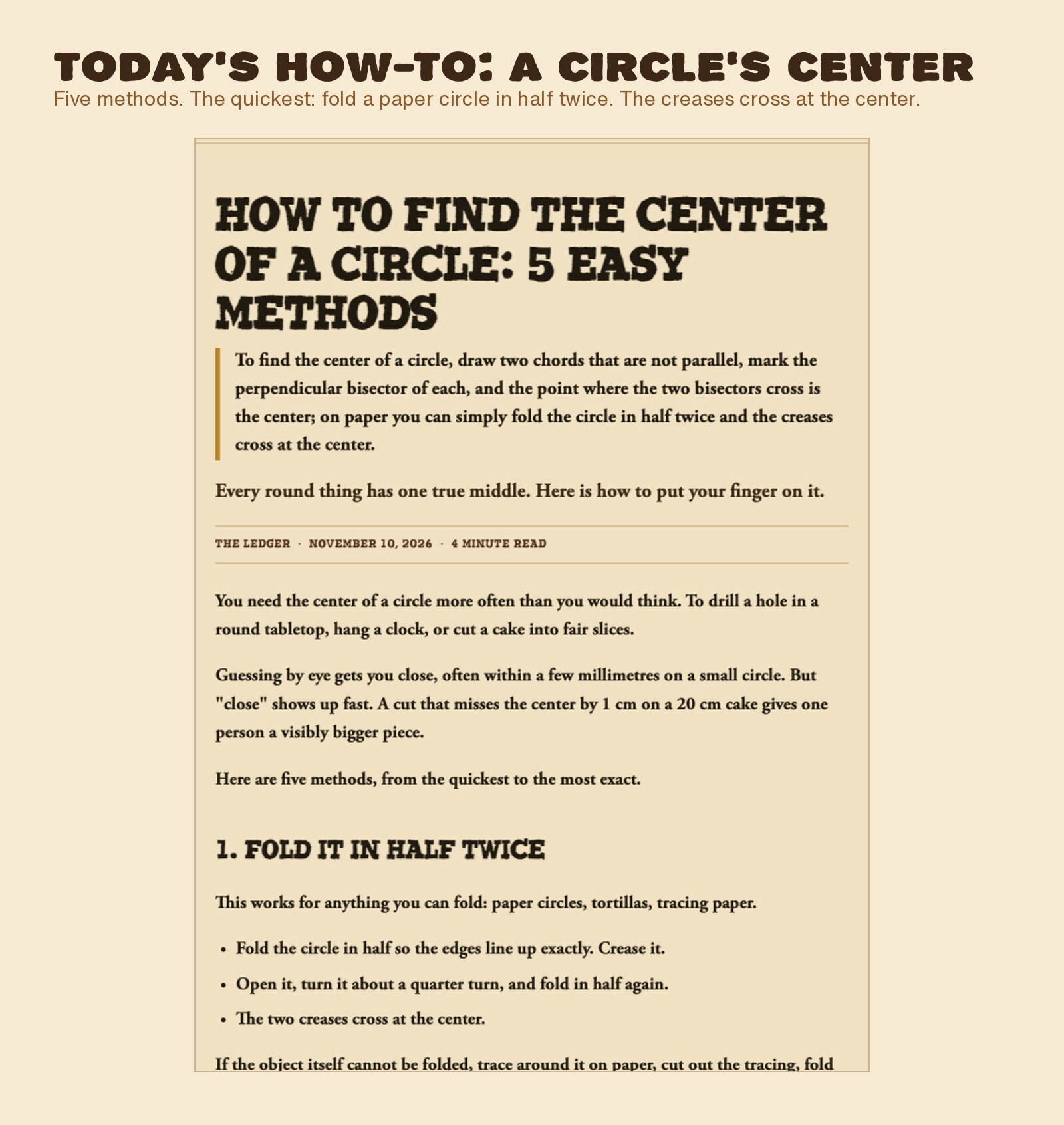
Halfsies is my daily cutting game. You get three hand-drawn objects a day and one cut each, and a scale weighs the two sides. Today its guides page put up a how-to on finding the center of a circle. It reads like a shop-class handout, and it also explains which objects in the game are easy.
One point does all the work
A circle has a property that a cleaver does not. Any straight cut through its center makes two equal halves, and the direction of the cut does not matter. So halving a circle comes down to one point. Find the center and you are done. Miss it and every cut is uneven. The guide puts a number on that: a cut that misses the center by 1 cm on a 20 cm cake gives one person a visibly bigger piece.
Finding the center with a sheet of paper
The guide lists five methods. The one I would use at a workbench needs a sheet of printer paper. Put the corner of the sheet on the edge of the circle. Mark the two places where the sides of the paper cross the rim. The line between those marks is a diameter, because a right angle with its corner on a circle always spans one. Move the corner to another spot, do it again, and the two diameters cross at the center.
If the thing can be folded, there is a quicker way. Fold it in half, turn it about a quarter turn and fold it again. The creases cross at the center. Sliding a ruler until you find the widest line also works, but the guide rates it only fair, because the width barely changes near its widest point.
Where it stops helping
The same rule covers any shape that looks identical turned upside down, like a rectangle or an oval. Cut through the middle point and you have two halves. Most objects in Halfsies are not like that. A cleaver has a heavy blade and a thin handle. A lantern has a wire loop on top. The scale weighs drawn area, so the handle counts for little and the blade counts for a lot, and the half line sits well away from the visual middle.
The score for each cut is the lighter half divided by the heavier half, times 100, and a perfect day is 300. Round objects are the friendly ones. The lopsided ones are where the points go.
Kids see it faster
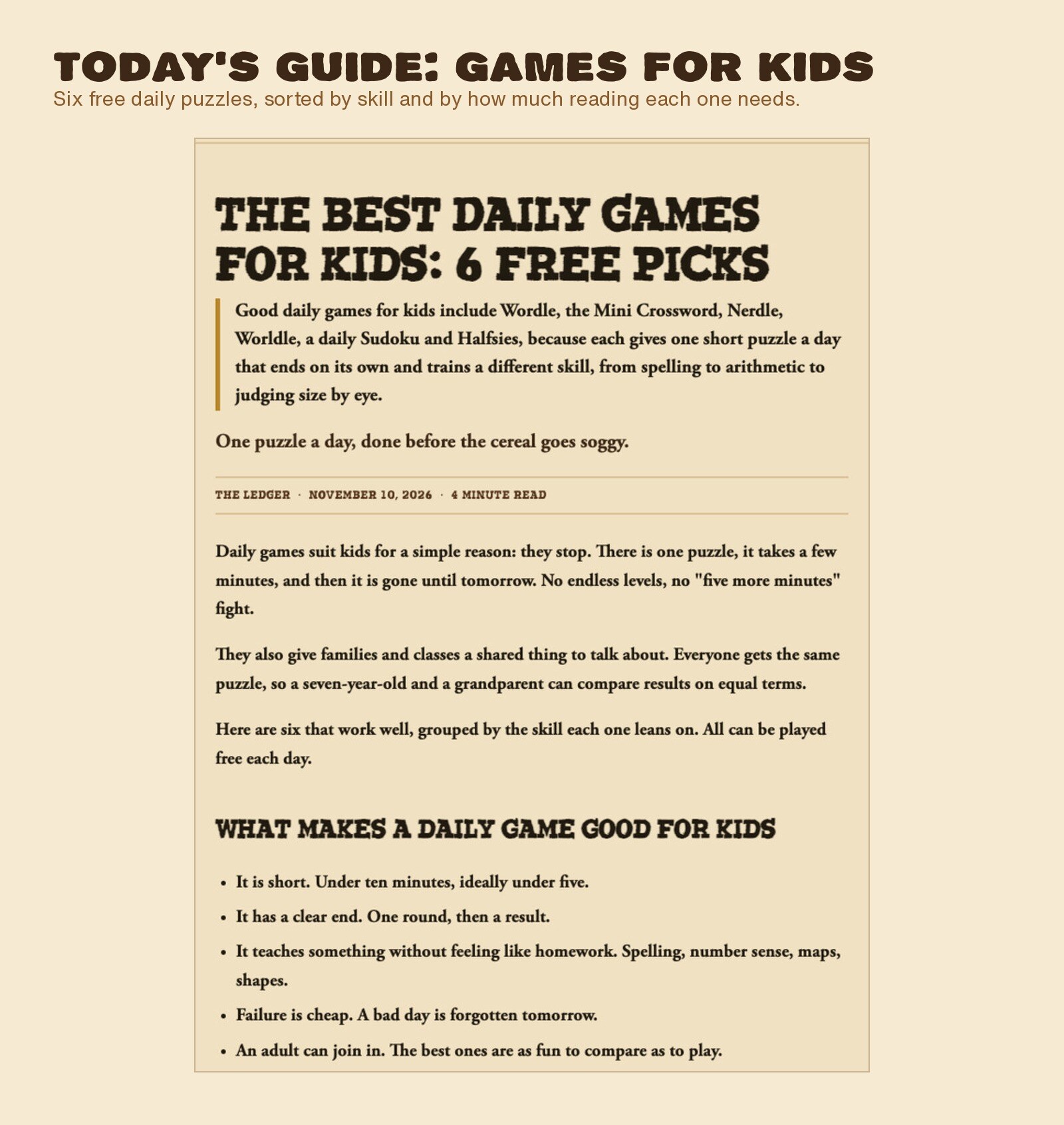
The other guide that went up today lists six free daily games for kids. Its note on Halfsies says kids pick up the area rule fast, often faster than adults, who tend to cut at the visual middle. It suggests asking "why did you cut there?" before asking for the score. I like that question. It is the one the circle guide answers with a sheet of paper.
The Halfsies ad diary #12 has the rest of the day, including the ad account, which spent nothing again. Diary #11 covers the bonus rounds, where the job is quarters and not halves.
Both guides are on The Ledger, and the game is at halfsies.jejestudios.com.