TL;DR
- Establish the setting before taking its details away.
- Keep a recognizable face, prop or viewpoint when the colors change.
- Use a moving excerpt to check whether a graphic effect helps the action read.
A cartoon can abandon the colors of its setting for a shot. A subway becomes a red field; a face becomes a few black lines. The change can make a sudden reaction or threat much easier to see. But the viewer still needs to understand who is looking, where the danger is and what just happened.
In In the Subway, from The Adventures of Mr. Popcornman, the drawings move between a recognizable train environment and much flatter graphic images. The useful lesson is in the finished sequence: what stays recognizable while the picture changes around it. This is a reading of the public film, with no claim about the tools or process used to make it.
Give the audience a place to return to
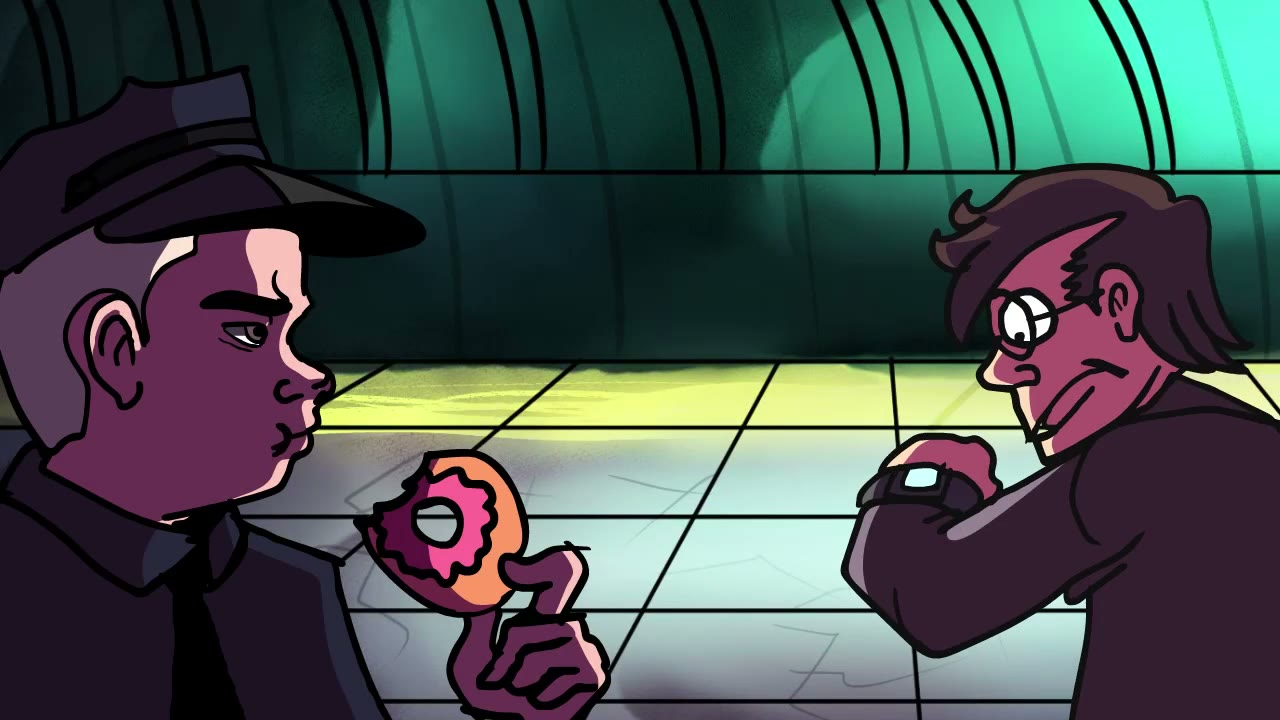
On the platform, the floor tiles and curved wall give the figures a place to stand. Their faces and clothing have several colors, and the setting has its own shading. That detail establishes an ordinary physical space before the film moves into more abrupt, simplified images.
A graphic interruption has more force when viewers know what it interrupts. If every shot begins with a new background and a new visual treatment, the audience must continually rebuild the scene. A few clear views of the setting give them something to remember when the detail disappears.
Repeat a viewpoint across the change
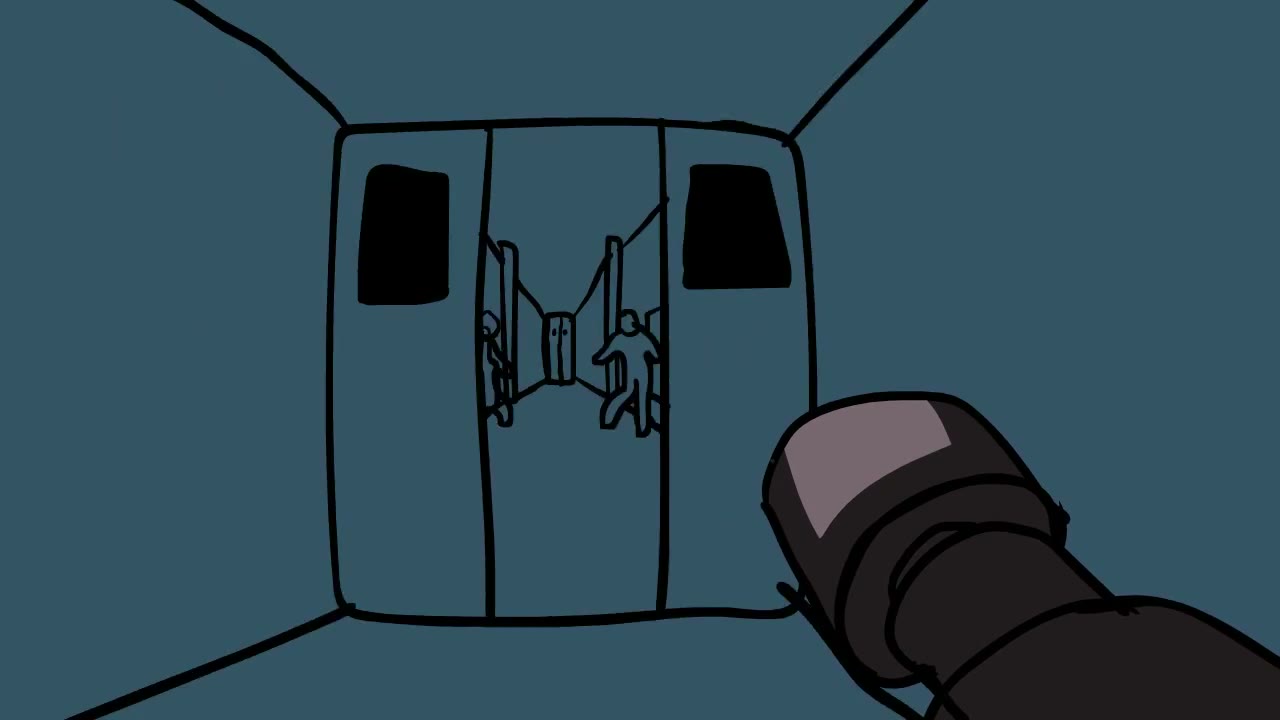
The view down the carriage appears several times. The connecting doors occupy the far end of the shot, while a dark cylindrical object enters from the foreground. Changes in the drawing and color do not erase that basic relationship: something close to the viewer points toward something farther away.
Repeating a viewpoint can do some of the work normally carried by background detail. When that arrangement returns, the viewer can recognize the direction of the action without reading every line of the train again. It also gives the next close-up a context. The close-up can concentrate on a face or an object instead of explaining the entire space.
Simplify the image at the point of emphasis
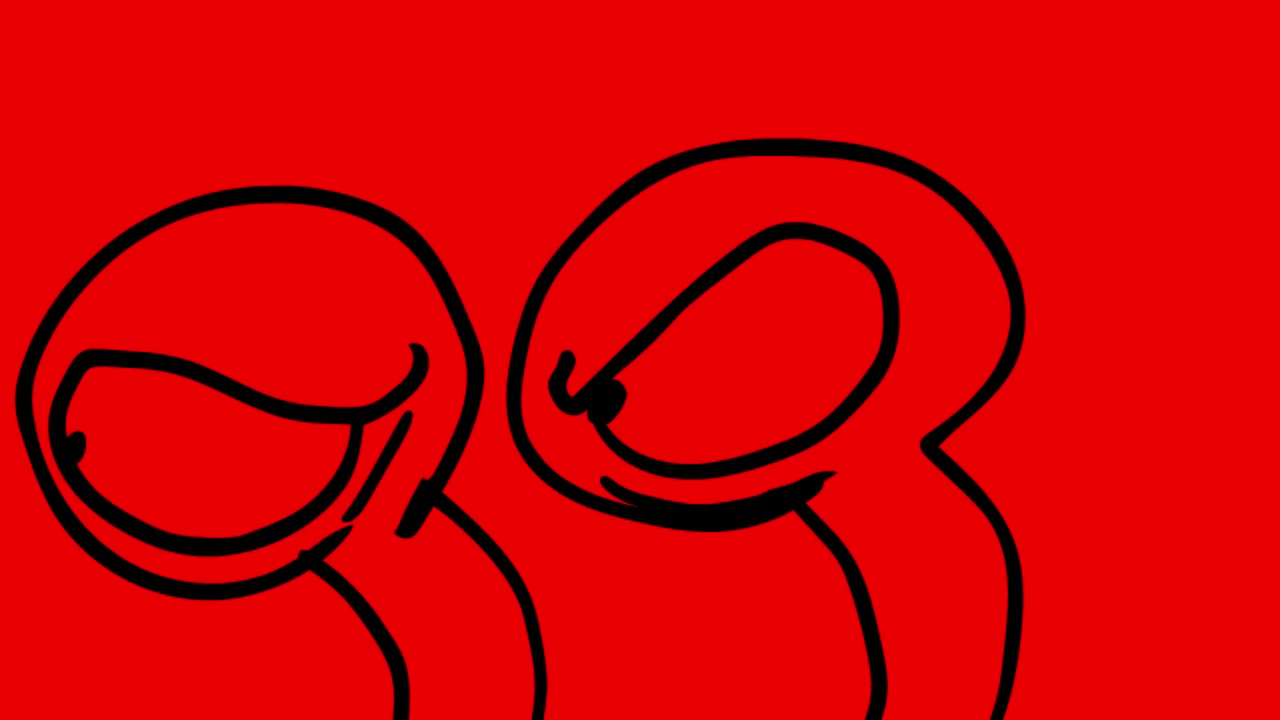
The red images remove much of the shading and scenery. Eyes and mouths become especially prominent. The drawings still carry expression, but there is less around them to compete for attention. A startled look can occupy the whole image.
This treatment works differently from placing a red light inside a fully drawn room. The background no longer describes the room at all. It becomes a graphic field around the face or action. The viewer reads the expression first and relies on the surrounding sequence to remember the setting.
The risk is losing an identifying feature at the same moment that the palette changes. Keep enough of a face, outline, prop or position for the audience to follow the cut. A bold image that cannot be connected to the previous shot may interrupt the action instead of emphasizing it.
Judge the change in motion
A still frame shows the graphic treatment. Playback shows whether the transition makes sense. Watch the excerpt once without pausing: can you follow the shift from the carriage to the characters and back? Then inspect the cuts. Look for the shape, direction or expression that connects each image to the next.
For an animated action scene, test the sequence at its intended size as well. A face that dominates a large monitor may have much smaller eyes on a phone. Simplifying the picture can help, provided the remaining marks carry the information the audience needs.
Watch the complete In the Subway film for the surrounding action and sound. For another approach to character performance, read Body language and emotion in an animated short.