TL;DR
- On October 17 I judged 283 animated takes on a new page called /takes: 113 added to the film, 6 swapped in, 115 rejected and 49 left alone.
- Many approvals came with a note. Claude fixed most of them by cutting around the problem, because a repaint would have needed a new GPU job.
- A pipe floats in front of Lilith for ten seconds in Slade's booth. The cut now starts at 10.5 seconds.
- RunPod pods closed that day cost about $20.35 and made 51 clips. 12 pods made none, about $11.17.
- The mistakes log gained 25 rows dated October 17, including one where Claude blamed RunPod for our own empty pods.
Day 13 was the crew's full day back. Day 14 was mine: a long day of watching takes and writing notes.
Day 14 at a glance
How do you judge a thousand AI takes? On my film, on October 17, you open a page that shows each take once and click add, replace, reject or skip. The page, /takes, was new that day, and Claude runs it. Its first version showed some clips three times, as the raw file, the graded file and a phone copy. Claude now compares the actual frames and shows each clip once.
I started at 12:09 p.m. and made my last call at 7:44 p.m., with breaks. Between my notes, the edit room ran nine scheduled scene edits, RunPod made 51 clips, and the Midjourney runner came back at 8:15 p.m. after a day off.
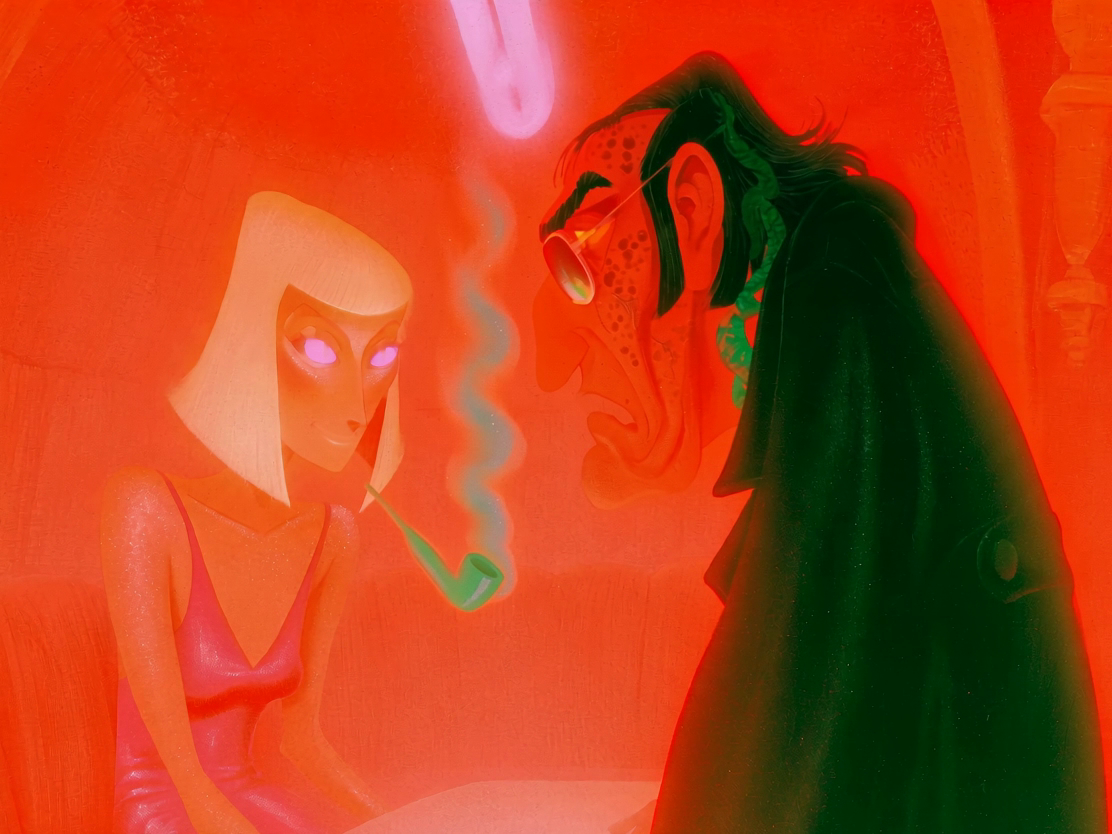
What did 283 verdicts look like?
- Added: 113 takes I wanted in the film.
- Replaced: 6 takes that should take over a slot from an older take.
- Rejected: 115. They come out of the cuts on the next run.
- Left alone: 49, mostly raw copies of takes I had already judged.
Scene 13, the warehouse fight, got the most verdicts (24), then Scene 12, John's dream (15).
How do you fix a clip without a GPU?
Many of my approvals said "good, but". Repainting a moving shot means a new GPU job, so Claude fixed most of them with the edit instead:
- The floating pipe. In Slade's booth in Scene 10, Lilith's green pipe hangs in the air in front of her for about ten seconds, smoking, with no hand on it. I asked for a cut that hides it. The shot now starts at 10.5 seconds and plays to 13.0: the push into Slade's mirrored glasses, with the pipe out of frame.
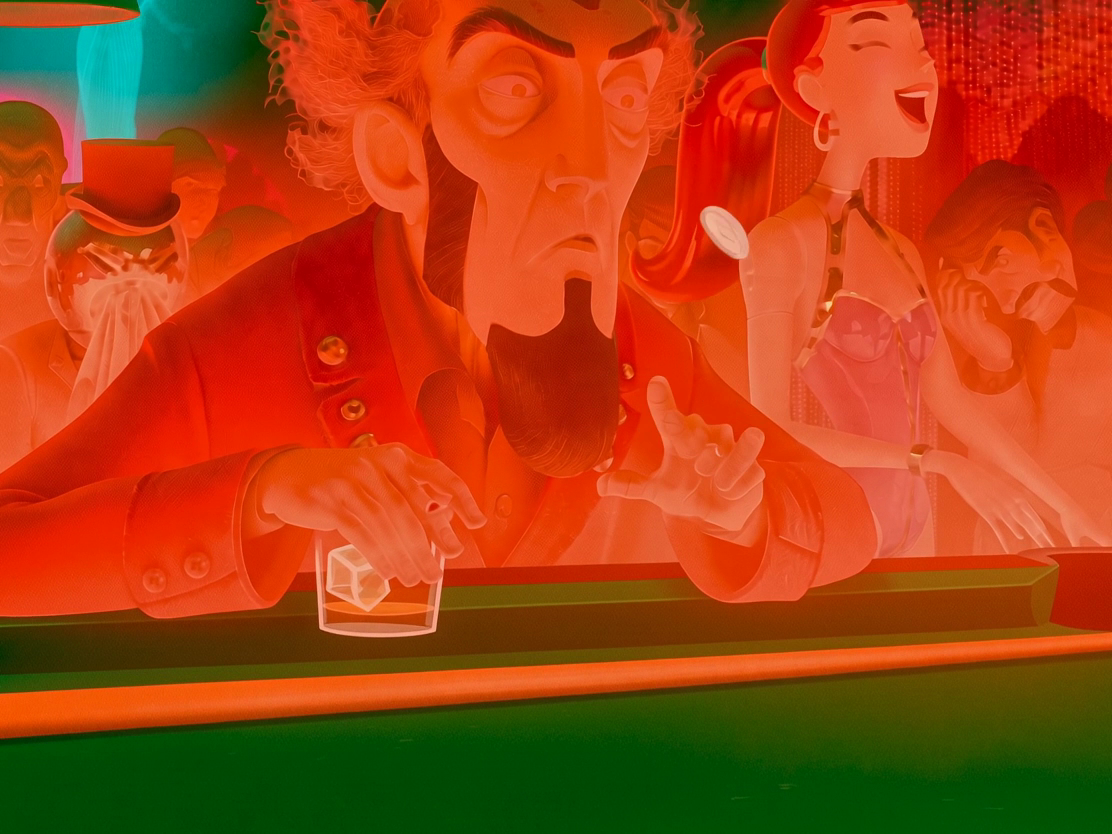
- The extra finger. The magician at the bar rail flips a coin with a hand that has a finger too many. Claude couldn't repaint a hand in motion without a GPU job, so it checked where hands appear. They're in frame from 1.5 to 12.0 seconds. The cut uses 12.0 to 14.75: his face, the redhead beside him and the holo singer. No hands. My coin trick is now a piano recital filmed from the neck up.
- The wrong voice. In the Dream Lab, Scene 11, Lilith stands in a nurse's cap holding up a syringe, and her lips move to the old doctor's line, in his voice. It plays like a kung fu movie dubbed at 3 a.m. I said we can only use it if the voice is hers. No recording of that line in her voice exists, and Claude didn't fake one. It kept 0.65 seconds of the take, from 2.0 to 2.65, where her mouth is shut, checked frame by frame. The doctor's line now plays off screen.
- The shaky bed. John and Lucy asleep in Scene 02 had a camera that wobbled. Claude steadied it with a deshake filter and a 6% crop.
- Lucy's eyes. I asked for her eyes a little darker and browner in Scene 07. Claude tracked the iris on every frame and turned the fix off on blinks.
- "First three seconds are good." I wrote that, or "first six," on several takes. Those numbers are now hard in and out points in the edit.
One fix didn't hold. In Scene 02, John's line names a paint color, cadmium red. The graded take had gone far too red and cut off the word. Claude restored the grade and lengthened the shot to hold the whole line, but I rejected that picture later, on October 23.
What did the edit room do?
Nine scheduled runs finished, one scene each. A tenth stopped early at 7:41 p.m. because my second pass had started. Five more were skipped, because another render already held the edit lock. One job at a time is a rule here.
Three critics scored picture, sound and lip sync before and after each run:
- Scene 01 (12:29 a.m.): 5.33 to 6.67. The opening narration had drifted 9.25 seconds late behind a flying-car shot. It's back on time.
- Scene 02 (2:29 a.m.): 5.83 to 6.5.
- Scene 07 (3:30 a.m.): 3.5 to 5.33. The cut was still playing lines from before the October 8 script rewrite. Three lines were re-recorded in the cast voices.
- Scene 11 (4:30 and 8:29 a.m.): 4.67 to 4.83, then 5.0 to 5.67.
- Scene 08 (6:29 a.m.): 6.0 to 6.33.
- Scene 09 (10:28 a.m.): 5.33, unchanged, with more real picture.
- Scene 07 again (11:28 a.m.): 5.17, unchanged. The radio bulletin went back to its scripted place.
- Scene 01 again (1:28 p.m.): 6.67 to 6.33. My rejection took out its closing shot, so the new ending scored lower.
Scene 07 is the one that stayed with me. For nine days the cut played lines the script no longer had. Nobody heard it until a run compared the cut against the current script.
What did the GPUs cost?
RunPod pods closed on October 17 cost about $20.35. There were 23 of them, and together they made 51 clips. 12 made nothing, about $11.17.
Across October 16 and 17, 18 empty pods had cost $18.23. Claude wrote to RunPod support, blamed their data center region and asked for the money back. RunPod showed all the pods had been healthy, with SSH up in 20 seconds and no host faults, and said no. The likely cause was on our side: the VPN on this Mac and our own SSH path. Two rules came out of it. The waste breaker now stops all paid batches after one empty pod, not three. And no provider gets blamed without proof.
What else went into the mistakes log?
The log gained 25 rows dated October 17. A few of them:
- Everything at 120%. I said the fight shots should play at 120% speed. Claude sped up the whole movie and re-rendered 15 scenes. Now only shots marked as fights get the speed-up, and when an instruction's scope is unclear, Claude says how it read it in its first reply.
- Sound on. Claude opened the review page to check it, and a take started playing with sound on my Mac. Media pages are now checked through the API, never opened live.
- Rejected takes coming back. Three takes I rejected kept returning to the cuts, because the speed pass restored its own copy of the original. The swap tool now checks that copy too.
- The diary itself. Some earlier posts and articles quoted me at my least patient. I asked that the diary never show me swearing or berating anyone, quotes included. 37 pieces were rewritten calmly that day, and a gate now checks every new one.
- TikTok. 9 of our 32 TikToks had 0 views and 2 had 1, after we posted in bursts, after midnight and with violent clips. 11 were set to Only me, not deleted, and new spacing rules started.
What did Midjourney do?
Earlier in the day I paused new frames so the crew could work on the approved frames and the clips we already had. The runner started again at 8:15 p.m. It now takes at most four jobs an hour. It ran 13 jobs for Scene 20 before midnight, four takes each.
Claude's pre-judge checked 52 frames that day: 8 passed and 44 failed. Eight Scene 20 shots were parked for rewritten prompts, never the same prompt twice.
The numbers for October 17
- My verdicts: 283 takes on /takes between 12:09 and 7:44 p.m. 113 added, 6 replaced, 115 rejected, 49 left alone.
- Edit room: 9 scheduled runs finished, 1 stopped early, 5 skipped for the lock.
- RunPod: about $20.35 for 23 pods, 51 clips, 12 pods with no clips.
- Midjourney runner: 13 jobs from 8:15 p.m. Pre-judge: 52 checks, 8 passed.
- Mistakes logged: 25 rows.
- TikToks set to Only me: 11.
So what did Day 14 teach me?
A take can be 90% good and still be unusable for the 10%. Most of my notes on October 17 were about that 10%: a pipe, a finger, a voice. Most of the fixes were in and out points, and an honest fix sometimes leaves 0.65 seconds. That's still better than a faked voice.
The other lesson cost $18.23 and a polite no from RunPod: check your own side first. Follow the run on the Making Death Match series page.
FAQ
How do you fix an AI-animated clip without re-rendering it?
Cut around the problem. On October 17 Claude hid a floating pipe by starting a shot at 10.5 seconds, and hid an extra finger by using only the 2.75 seconds where no hands are in frame.
How many AI takes did the director judge in one day?
283 on October 17, between 12:09 and 7:44 p.m.: 113 added, 6 replaced, 115 rejected and 49 left alone.
Why not fake the right voice on a lip-synced clip?
Lilith's mouth was moving to the doctor's line, and no recording of that line in her voice exists. Claude kept only 0.65 seconds where her mouth is shut rather than invent a performance.
How much did a day of AI animation on RunPod cost?
About $20.35 for 23 pods closed on October 17. They made 51 clips, and 12 pods made none, about $11.17.
While you wait for the next update: play Halfsies
Halfsies is our iPhone game, live now. One cut. Two halves. Each day you get three objects and one attempt at each: cut it exactly in half by eye and the scale tells you how close you got. No extra fingers required. Download Halfsies on the App Store