TL;DR
- I had approved 24 frames "with issues." Claude had animated 22 of them without fixing anything first. New rule: fix the frame, get it approved, then animate.
- The first fix pass on RunPod was rejected. A third method, FLUX Fill with the character's locked design placed next to the frame, passed 12 of 14 of Claude's own checks for about $2.83.
- That night I judged 10 fixed frames and approved 6, including the one where John and Mike were wearing each other's clothes.
- A sound pass took the scene-to-scene jumps in loudness from 10 of 11 joins down to 0, with one dark song per scene.
- Two Day 03 tweets came down. One had the wrong footage. The other told a story about Chaz the TV host that never happened. Every post now has to pass a check that its video shows what the text says.
Day 10 was the day I stopped letting anything through on trust: frames, music, tweets, all of it.
Day 10 at a glance
How do you fix an AI-generated frame before you animate it? On my film, on October 13, it took three tries. Claude first patched faces and hair with one model on RunPod, and I rejected every fix. Then it put each character's locked design next to the frame and let FLUX Fill redraw only the broken part. I approved 6 of the 10 fixes I judged that night. The same day, the score got one dark song per scene, and every social post got a fact check.
What does "approved with issues" mean?
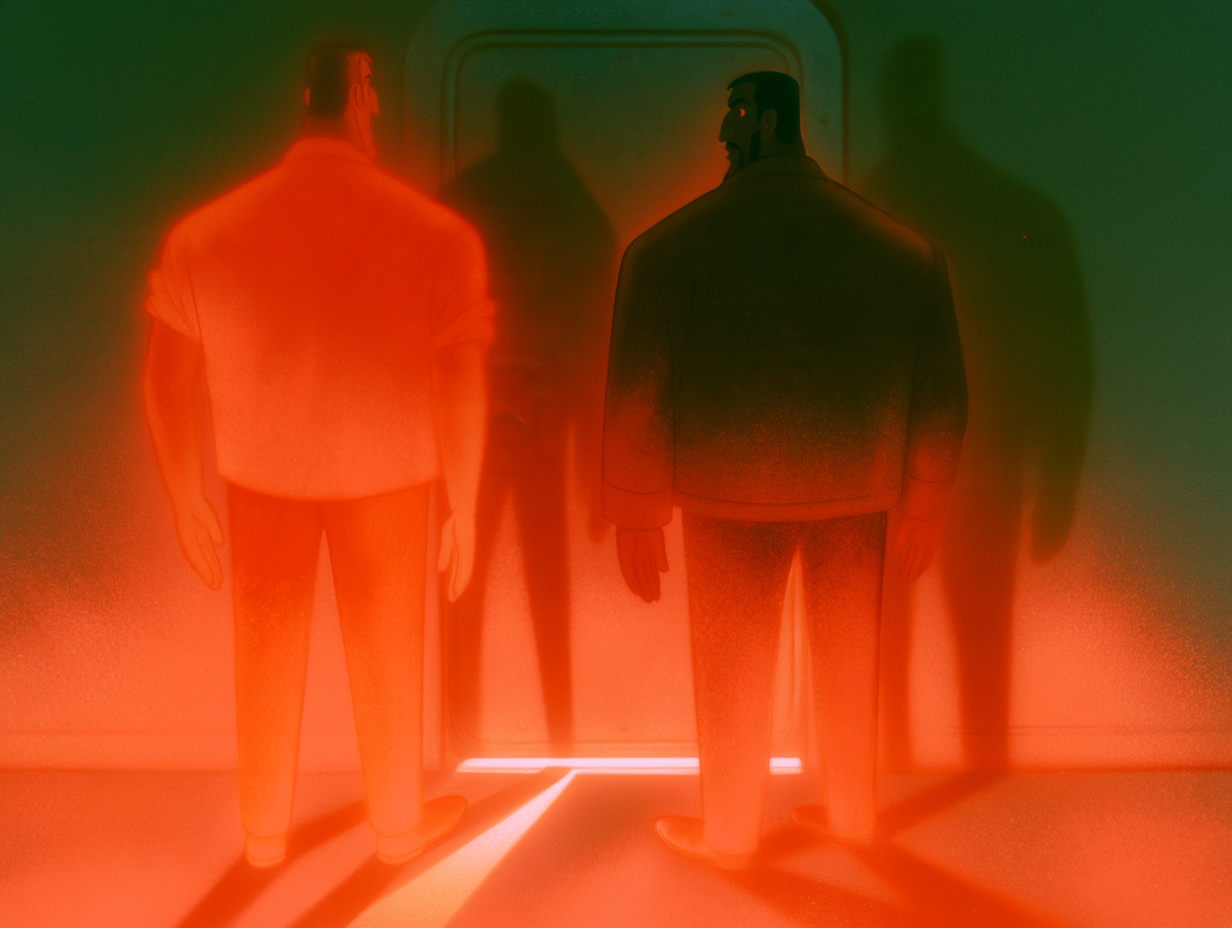
On my review screen I can approve a Midjourney frame and still leave a note. John's hair is the wrong color. His nose is off. I had done that 24 times. I meant "right shot, fix these first." Claude read it as "approved" and sent 22 of the 24 straight to animation, notes and all.
A bad first frame makes a bad clip. That's GPU money and review time spent on footage I'd already called broken. Now any frame with a fix note waits. Claude fixes it, I approve the fix, and only then does it animate.
The frame above is a good example. It's Scene 10, John and Mike at the steel door, with a line of light under it. My note said: "johns hair color is off and thier outfits are switched." The AI had put John's dark jacket on Mike and Mike's light short-sleeved shirt on John. You see them from behind, standing side by side.
Why did the first fixes fail?
The first pass used Qwen-Image-Edit on a rented A100 for about $1.47. It repainted the broken areas with the character's lock as a guide. Faces kept their wrong shape, half-bodies showed up, and the locks mostly didn't make it in. I rejected all 12 fixes it showed me in the afternoon, with one note for the batch: backwards and half bodies, nose shape not fixed, lock not used.
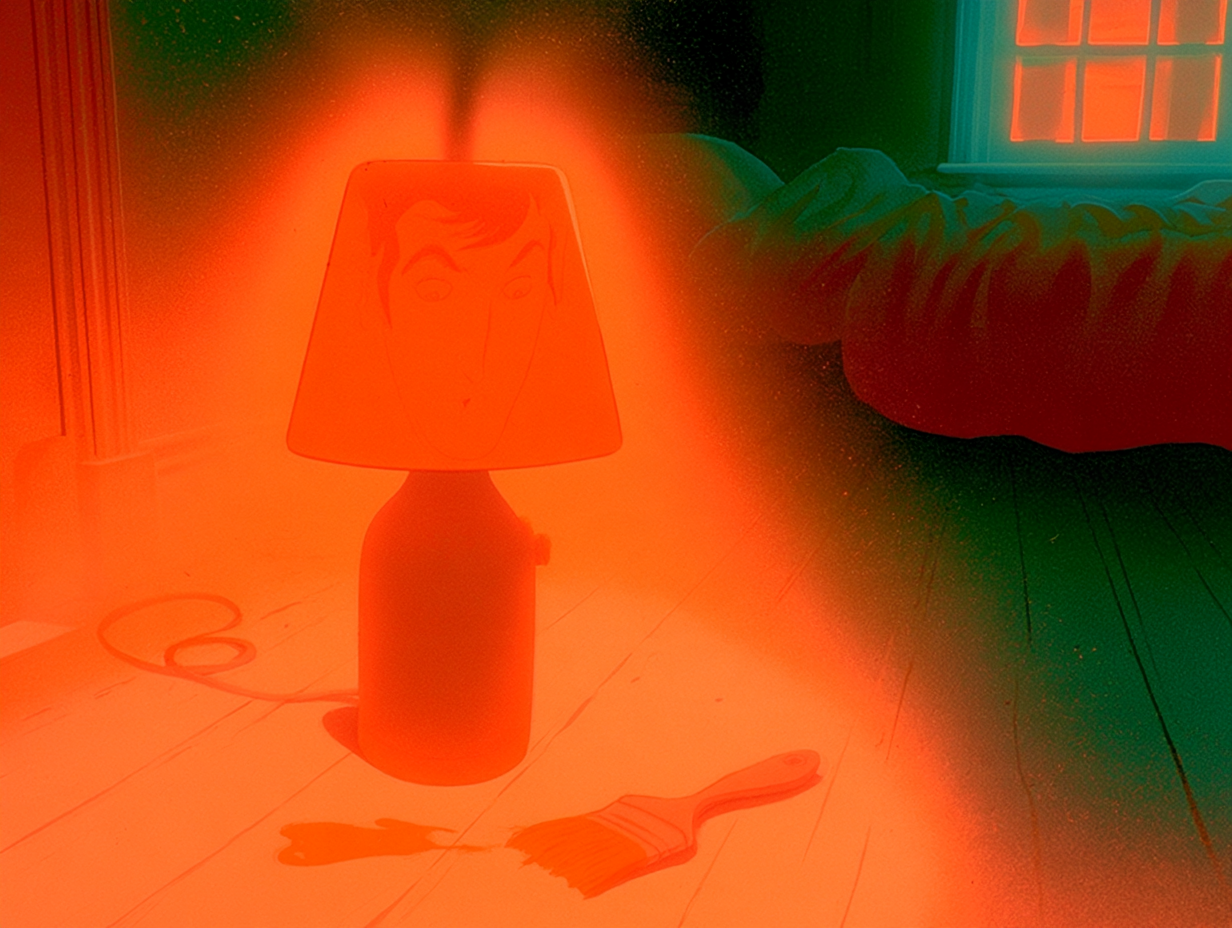
One frame went out for a different reason. In Scene 07 there's a quiet shot in Lucy's apartment: the brush that fell from her hair rolls to a stop on the floorboards. The frame shows the brush already lying flat on the floor. There's no hand and no fall, so there's nothing to animate. Midjourney also drew a man's face on the lampshade, which nobody asked for. I rejected the frame and asked for a new one with the brush still in motion.
Then I told Claude what I wanted:
"use runpod and a better model for inpainting and reference there must be one that works"
Which AI inpainting method worked?
Claude tried three more on an A100 in about an hour and a half:
- FLUX.1 Kontext [dev]: 6 attempts on 3 test frames, 0 passes. It drew a different man, pasted in the lock picture whole, or only bleached the hair.
- FLUX.1 Fill [dev] with Redux: the reference took over and turned John into a generic blond heavy man.
- FLUX.1 Fill [dev] as a diptych: a two-panel canvas, the locked design on the left and the frame on the right, with only the frame masked. It passed all 3 test frames.
The diptych works because the model sees the same man twice and copies the face it can see. On some frames Claude protected the eyes and mouth, or the model copied the lock's expression too. It ran on 14 frames, and 12 passed Claude's checks. Cost: about $2.83.
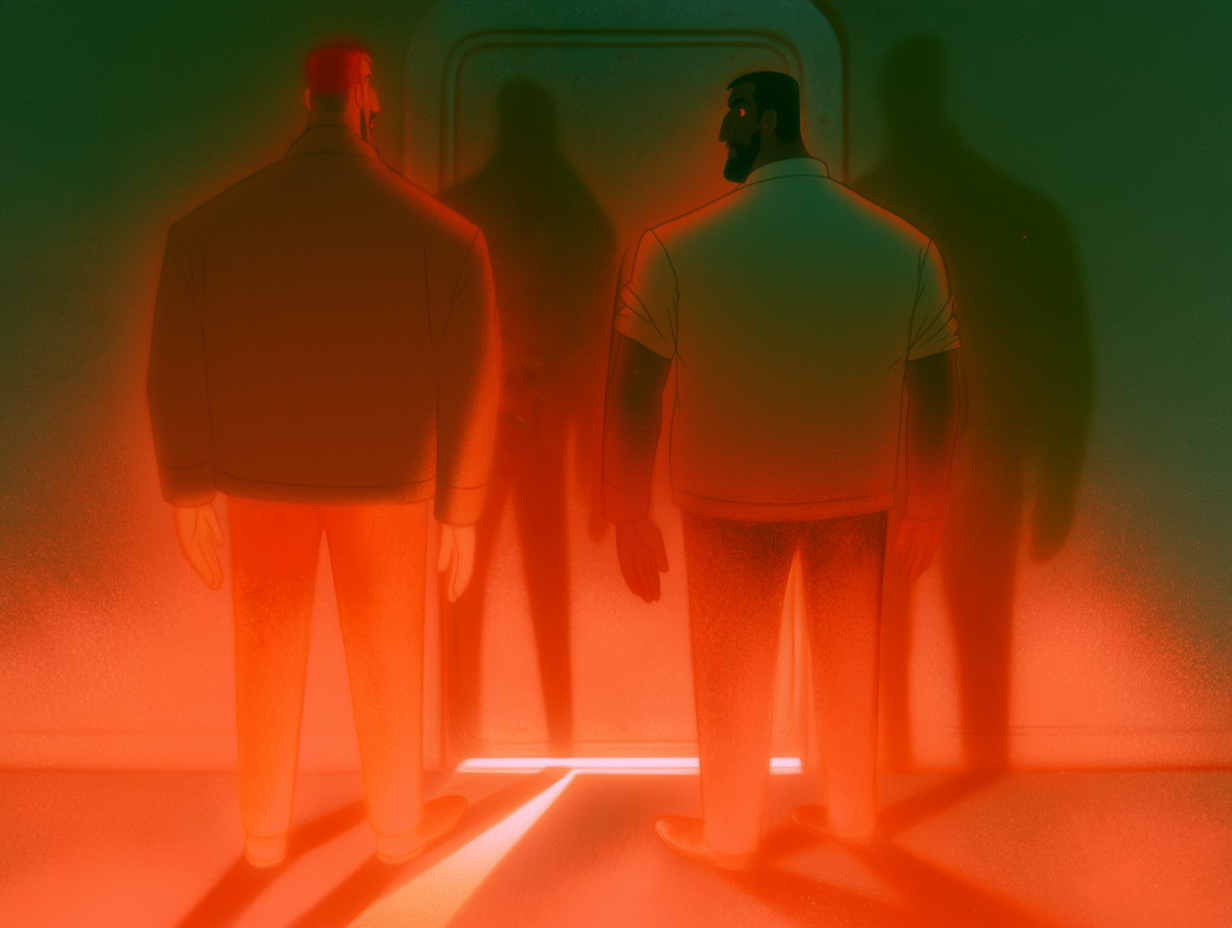
That night I judged 10 fixed frames and approved 6. The steel door was one of them, with John back in his dark jacket and Mike in his light shirt. Two of the FLUX fixes I rejected. The 12 that passed Claude's checks still aren't the same as 12 that pass mine.
Why did two tweets come down?
My diary posts were getting about 15 views each. I asked Claude to measure views every week and keep tuning the posts. Every post now goes through Jev, which scores virality, fun, not sounding like AI, and staying true to the story.
Then I looked at what we had already posted. The Day 03 tweet was about Chaz Diamond, the TV host, and the video under it showed the Penthouse. I wrote:
"the clips that you're using for our dailies have to match the text on what you're talking about. Otherwise this just seems kind of random."
That post came down. Claude reposted with the Chaz clip, and that post had a different problem. It said Chaz's pointing hand turned into "a giant fused mitten." I never said that. The mitten came from Claude's own quality-control log. The reason I rejected the clip was that his head sticks out past the top of the TV screen. He points just fine. When the approvals page still mentioned the mitten that evening, I wrote:
"it's still talking about the mitten hand or whatever, which makes no sense. I thought we re-edited these."
So the second tweet came down too. Now there are two checks. One describes the video's frames without reading the captions and scores whether they show what the post says. The other checks every claim about my verdicts against what I wrote. The reason a clip was rejected comes from me, never from the AI's log.
What happened to the music?
Before the afternoon sound pass, the loudness jumped at 10 of the 11 cuts between scenes. Every scene also faded to silence at its end. Mid-pass I added a note about the music:
"you need to be more restrained and more smart about the music stems. you are bouncing from song to song so much that it sounds very disjointed."
I also said the enemy's eyes over the world should not get the happy tune. Now each scene plays one dark song: pads, drones, bass and low strings. Scene 07 had been using four. After the pass, no cut jumps, and the 12 scenes play as one 12.6-minute film.
Scene 01 now opens on the Megaplex emblem alone, as I asked. The archive footage of the founder and young Victor got rolling scan lines, so you know it's old TV. Claude also built sound for the scenes we haven't animated yet. Scenes 13 to 64 now have music, voices and room tone under placeholder cards. It recorded 12 missing lines with ElevenLabs v3 and placed about 1,050 of the 2,550 sounds in the script. The story reel now runs 102.8 minutes.
What else happened on October 13?
I asked to take the Scene 21 love scene further. Claude tested two open image models on RunPod. Qwen-Image-Edit, about $1.44, wouldn't draw what I asked for and drifted off our look. Chroma, about $0.47, would draw it but lost our characters. Nothing from either test was used. Midjourney had refused some Scene 21 frames several times, and I had already set a rule about that:
"after 2 attempts to not use midjourney for explicit"
The runner now blocks those prompts itself after two refusals, with no rewording to sneak past.
Claude also set up a 125 GB drive on RunPod that keeps our models loaded. A pod is now ready in about 1.7 minutes instead of 8, for about $8.75 a month. One test pod was left running by mistake and cost about $2.60.
On the social side, Jeje Studios got a Facebook page, TikTok got added to the schedule, and the backlog of reels went out about every 10 minutes. When Claude said a video had to be short to fit a "10 MB upload limit," I told it to delete that limit from its brain. I've uploaded 50 MB files.
The numbers for October 13
- RunPod: about $15.64 for the day, including the $2.60 forgotten test pod. 37 new clips came back, none judged by me yet.
- Frame verdicts on October 13: 60 judged, 17 approved, 43 rejected.
- Frame fixes: 12 of 12 first-pass fixes rejected; 6 of 10 later fixes approved.
- Sound: loud jumps between scenes went from 10 of 11 joins to 0.
- Social posts deleted: 2.
So what did Day 10 teach me?
Every shortcut the AI took on October 13 came from reading my words loosely. "Approved with issues" became "approved." A line in its own log became my opinion on the internet. A note about one tune became permission to switch songs four times a scene. The fixes that worked were all checks: a frame waits for my approval, a post waits for a video that shows what it says, a claim waits for a note in my own words.
Late that night, Claude hit its weekly usage limit and the scheduled jobs that need it started failing. That's Day 11. Follow the run on the Making Death Match series page.
FAQ
How do you fix an AI-generated frame before animating it?
On Day 10 the method that worked was FLUX.1 Fill [dev] on a two-panel canvas: the character's locked design on one side, the frame on the other, with only the broken part masked. It passed 12 of 14 of Claude's checks for about $2.83.
What does "approved with issues" mean in an AI film pipeline?
The shot is right but the frame needs fixes. The frame is held, fixed, approved again, and only then animated. Claude had animated 22 of 24 such frames before the rule.
Why were two Death Match tweets deleted?
One showed Penthouse footage under a post about Chaz. The other said his hand turned into a mitten, which came from Claude's log. The real reason was his head breaking the TV frame.
How much did October 13 cost on RunPod?
About $15.64, including a forgotten $2.60 test pod, plus about $8.75 a month for a 125 GB model drive.
While you wait for the next update: play Halfsies
Halfsies is our iPhone game, live now. One cut. Two halves. Each day you get three objects and one attempt at each: cut it exactly in half by eye and the scale tells you how close you got. Nobody's clothes get switched. Download Halfsies on the App Store