TL;DR
- Establish a recognizable landmark before cutting between locations.
- Show how a boundary affects movement, rather than treating every location as scenery.
- Keep enough gameplay on screen to distinguish a visible route from a suggested destination.
A game trailer can show several attractive places and still leave a viewer unsure where anything is. Geography becomes readable when the places have a relationship: a yard beside a long building, a guarded entrance, a fence that separates the player from open ground. The viewer needs enough of that relationship to understand a decision.
The published Hell on the Border trailer moves through Fort Smith, a courtroom and fenced ground. Its isometric gameplay gives these spaces a consistent angle. The observations here concern what the finished trailer shows; they do not describe the game's implementation.
Start with a landmark that survives the cut
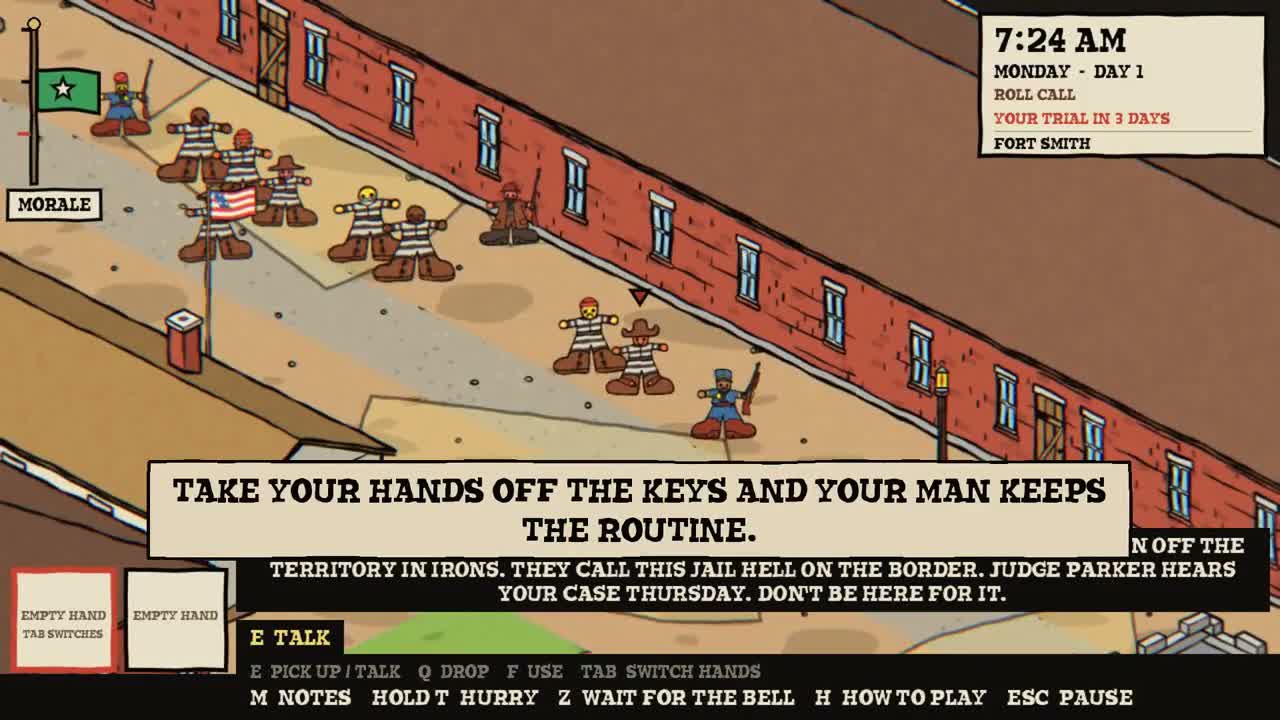
In the yard, the red building stretches across the upper part of the image. Small figures gather beside it, and the open ground lies below. The wall is a useful landmark because it stays readable even when the figures are small. It gives the eye a stable reference while the action changes.
For a location sequence, choose a landmark with a strong silhouette or broad color area. Let the audience see it long enough to recognize its relationship to the player. A second shot can then introduce a nearby entrance or obstacle without asking the viewer to learn an entirely new setting.
Make a change of room mean something
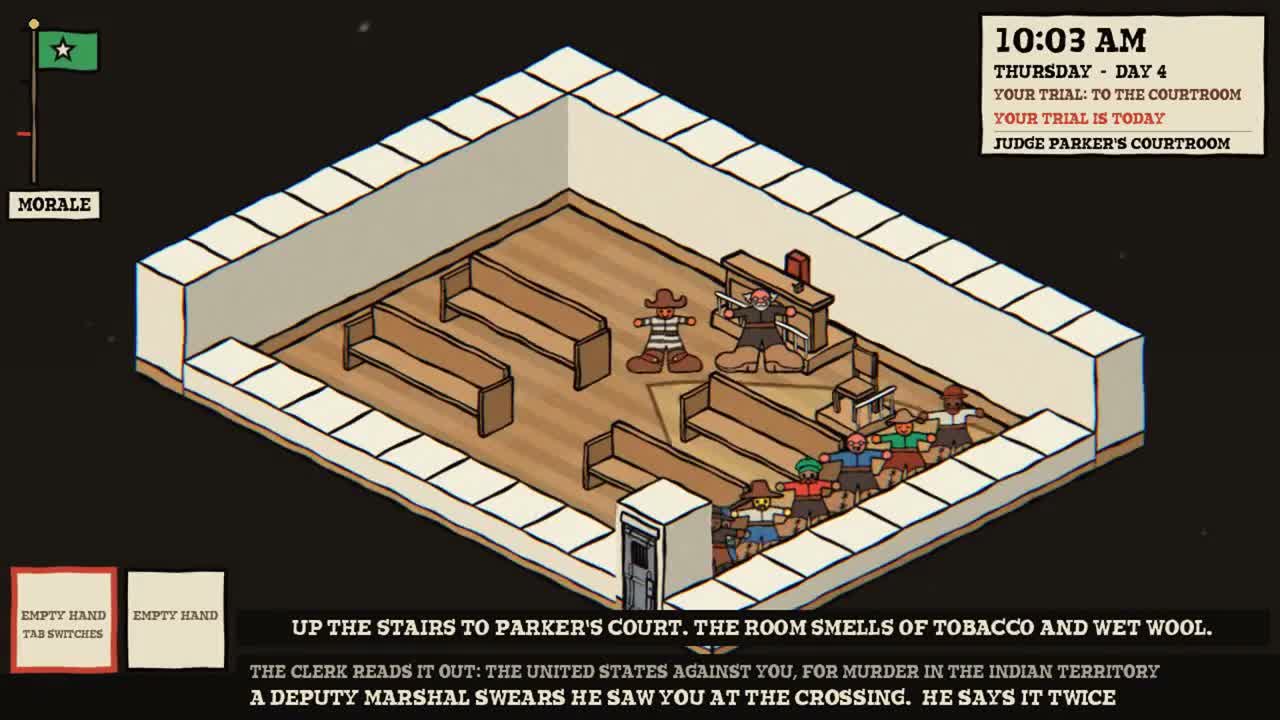
The courtroom changes the scale of the space. The wide outdoor ground gives way to a compact room with benches and a raised desk. Its open-sided presentation lets the viewer see the whole arrangement at once. The room feels like a particular destination rather than another stretch of street.
A trailer does not need to document every corridor between two scenes. It does need to make the purpose of a new space legible. Hold a clear room view before cutting to a detail. If the player enters somewhere important, show what makes that place different: its layout, the people inside, or an object that commands attention.
Show the boundary as part of the action
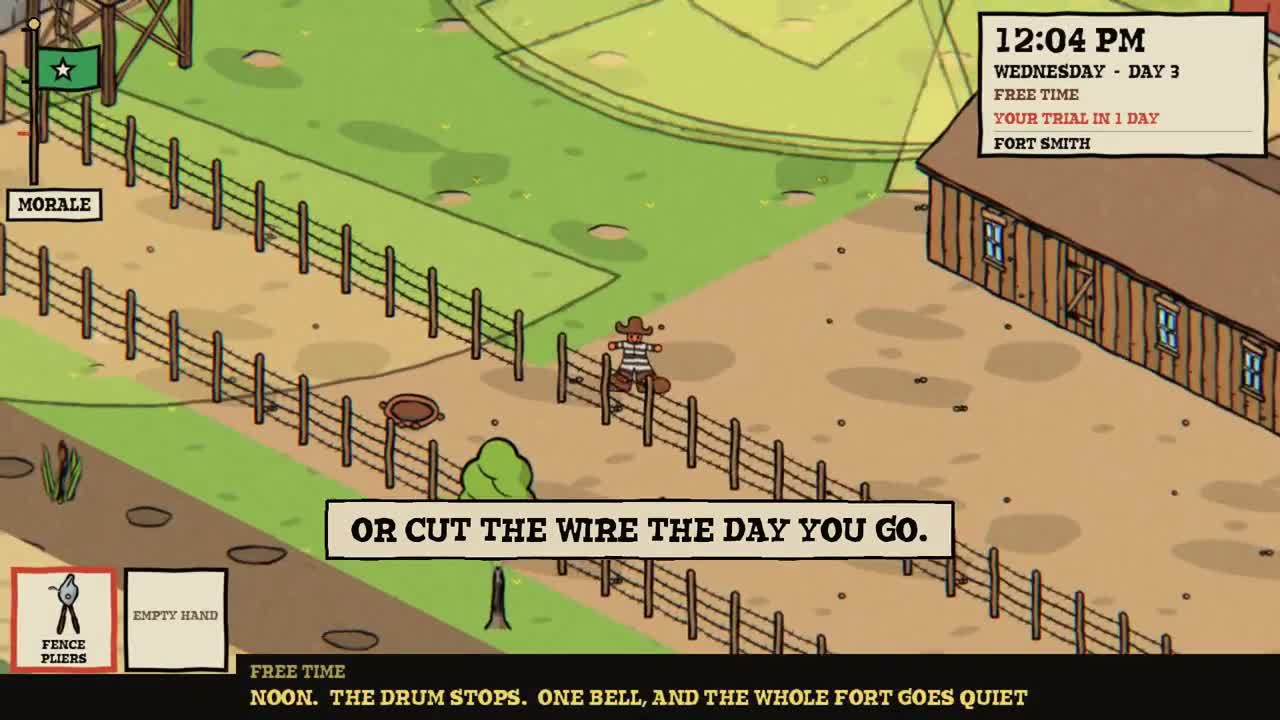
The later outdoor views place a fence across the scene. That line divides the ground into areas the viewer can distinguish immediately. The timber building supplies a second large shape, while the small figures provide scale. Together they make the setting readable without a separate diagram.
For an escape sequence, a boundary earns its screen time when the audience can see how it affects movement. A wall, gate or fence creates a question about the route. Keep the obstacle and the moving character visible together where possible. A close view of the character alone may convey urgency, but it loses the spatial problem.
Separate what is shown from what is promised
The trailer includes text directing the player toward the river. That establishes a destination, but a destination named in a caption is different from a route demonstrated on screen. When reviewing a cut, distinguish the two. Can a viewer point to the obstacle being crossed, or do they only know the goal from the words? Both can be useful, provided the sequence stays clear.
A practical review is to watch the location changes once with the captions out of focus and ask what remains understandable. Then read the captions and check what they add. For another part of the same trailer language, see showing time pressure in a game trailer. Geography explains where a decision happens; the clock explains why it cannot wait.